
Your First Day Alone With Your Preschooler: A Practical Guide for Dads
A first full day with Dad? Plan meals, rest and a simple outing, handle requests for Mom, and leave room to enjoy your 3- to 5-year-old’s company.
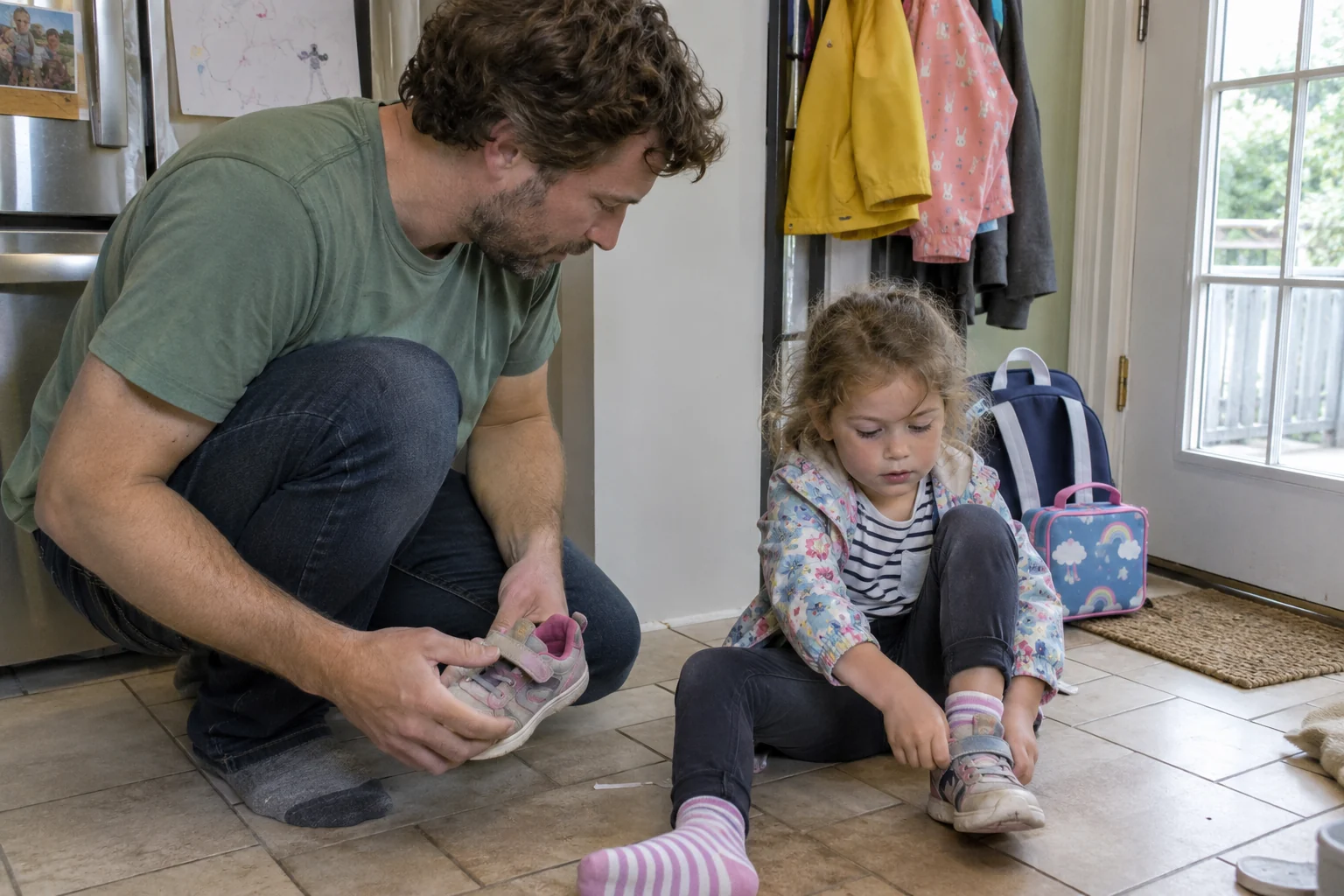
Before your first solo day, check meals, allergies, medication instructions, rest and emergency contacts with the usual caregiver. Plan one outing or game around those familiar parts of the day. Leave plenty of room for lunch taking longer than expected.
The door closes. Your preschooler looks up: “What are we doing?” You have a whole day together, a bag that may or may not contain spare clothes, and about eight ideas. Start with breakfast.
If this is your first full day caring for your 3- to 5-year-old on your own, start with the routines you already know. Leave room for one activity you can enjoy together and for the everyday jobs that still need doing.
What should Dad prepare before a first day alone?
Before the day starts, compare notes with your child’s other caregiver about anything that has changed: a missed nap, a new toilet routine, an illness or a different pickup arrangement. Check any allergies, medication and care instructions, and make sure you have the numbers you would need in an emergency. Agree on when they expect to return and what you will tell your child.
If you are going out, pack a change of clothes, water, a familiar snack and whatever your child needs for toileting. Have a simple lunch ready to make when you get back. Packing before your child has their shoes on saves an impatient wait by the door.
Give your child a small choice within the plan: “We’re going to the park after breakfast. Blue hat or red hat?” If leaving is already proving difficult, you can choose the hat yourself and offer a different job, such as carrying the ball.
How much should you plan for the day?
Keep meals and rest close to their usual times. Not every preschooler naps; use the quiet-time routine your child already knows. If they usually settle with a book after lunch, you can read it together before offering toys or another activity.
For a first day, you might plan breakfast, a nearby park, lunch at home and a quiet afternoon. Leave the second outing undecided until you see how you both feel. Getting dressed, traveling and stopping at the bathroom all take time.
Pick somewhere you already know, with a straightforward way home. A nearby playground may give you more actual time together than a special attraction across town. Check the practicalities before leaving: opening hours if relevant, weather, toilets and how you will get back if your child is tired.
If you want a few options ready, our 12 dad-and-child activities for ages 3–5 include simple ideas at home and outdoors. Choose one that interests your child; save the rest for another day.
What if your child keeps asking for Mom?
Answer the request directly: “You miss Mom. She’s at work, and she’ll be home after dinner. I’m here with you.” Use the right person and a return you actually expect. A familiar event often gives a preschooler a clearer reference than a clock time.
Pediatrician Wendy Sue Swanson, writing for the American Academy of Pediatrics, recommends preparing for separations and explaining a return through familiar events. “After dinner” gives your child a point in the day to recognize. Keep the explanation consistent if they ask again, and update it honestly if plans change.
If possible, agree on the goodbye beforehand. The departing parent says where they are going and when they expect to return. Then you take over. Offer closeness if your child wants it, or stay nearby without demanding a hug. You can say, “Would you like me beside you, or shall I sit here while you hold your bear?”
Acknowledge the feeling without turning it into a competition: “You wanted Mom to do it. Today I’m helping with your shoes.” Avoid asking your child to prove they love being with you. Missing someone and enjoying time with Dad can happen in the same day.
A brief call can fit some families, but arrange it with the other parent rather than repeatedly interrupting their day or promising a call they cannot take. If distress is intense, persistent or repeatedly prevents everyday activities, discuss it with your child’s pediatrician. For an immediate concern about illness or safety, respond to that concern rather than treating everything as separation.
What can Dad and a preschooler do together at home?
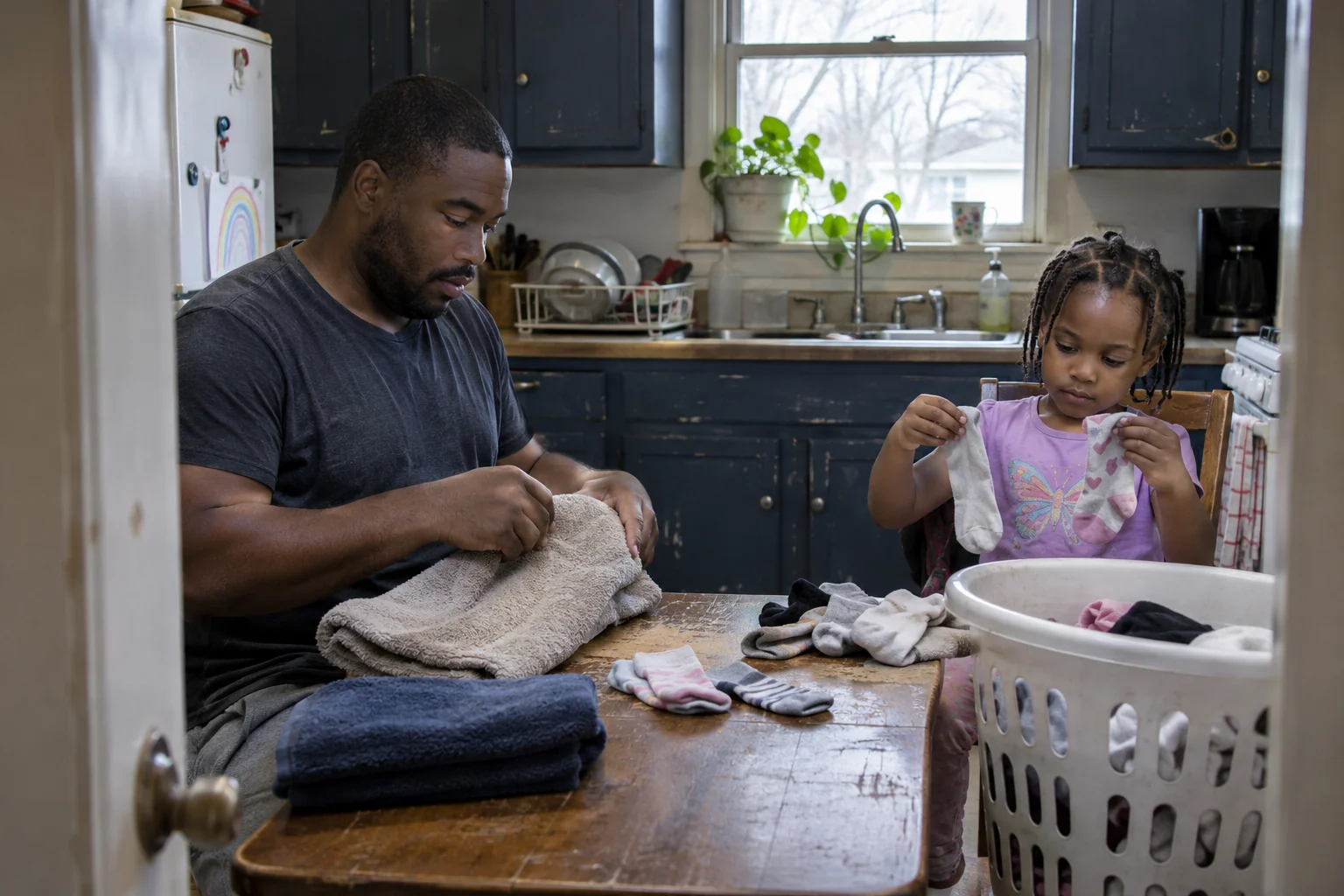
Join an activity your child has already started. If they are building, sit nearby and describe one thing you notice: “You put the long block across the top.” If they hand you a car, copy how they drive theirs and wait to see what they do next. Let them decide where the road goes.
This is child-led play: you follow their idea while staying responsible for safety. The CDC recommends describing, imitating and listening, with fewer questions and directions during this kind of play. For a few minutes, try commenting on the tower rather than asking its color, counting its blocks or suggesting how to improve it.
When you need to get lunch ready or put laundry away, invite your child into a small part of the job. They could match socks or put napkins on the table. Let them return to their toys when they lose interest; you can finish the task.
For lunch, choose something familiar and manageable. If you want to prepare part of it together, use an age-appropriate task from our guide to cooking with a 3- to 5-year-old. There is no need to test a new recipe and a new routine at the same time.
You can also offer a quiet spell with books or toys while you stay available. Being together for the day includes moments when your child plays and you make a sandwich. If you are running low on energy, these low-energy games for dads give you ways to join in without planning an elaborate activity.
What if lunch, rest or the outing goes wrong?
If getting out took longer than expected, shorten the outing so you can still eat around the usual time. If the park is overwhelming, go home. A snack at the kitchen table may give you a better chance to talk and play than another hour outside with an exhausted child.
When your child is upset, check the immediate situation before adding an explanation. Are they hungry, tired, uncomfortable, disappointed or struggling to stop an activity? You may not know straight away. Stay close enough to keep them safe and use a short sentence: “You wanted another turn. It’s hard to leave. We’re heading home for lunch.”
If you lose your temper, come back to it once you can speak calmly: “I shouted when we were getting ready. I’m sorry. I should have spoken more calmly.” Our guide to apologizing after yelling explains how to repair the moment without making your child responsible for reassuring you.
How do you finish the day and make the next one easier?
When the other parent returns, share the practical details they need and something you noticed about your child’s interests. Perhaps they spent the walk looking for drains, or kept rebuilding the same roof. You can pick up that interest the next time you play.
With your child, you might ask, “What should we do again next time?” Accept their answer, including an unexpected one. The bus ride might have mattered more than the destination.
Keep one thing you both enjoyed for another day. A walk for bread, the same library corner or a game after lunch can become a familiar part of your time together. Our guide to dad-and-child rituals has ideas for making that easy to repeat.
For future days together, the upcoming Dad & Me cookbook is planned for ages 4–7, with clearly divided jobs and 30 recipes. For today, start with a meal you already know. See the cookbook and join the updates list.
If you want this to become part of the regular week, our guide to sharing everyday parenting looks at taking on a recurring job, including the planning.
Sources and further reading
The day plan, activity suggestions and example conversations are Dad & Me Time editorial proposals. They have not been tested as a program or reviewed by the cited pediatrician.
General ideas for family life; seek individual professional advice for concerns about your child.