
Dad, what should
we do today?
Got some time with your child but no idea what to do? Pick a five- or ten-minute game, make something to eat, or read a story where they get to choose what happens next.

Pick a game
or an everyday situation.
Choose a category and how much time you have. Each activity lists what you need, the steps, and something you can say to get started.
You want to play together and can’t think of a game.
The Very Silly Shop
Your child runs the shop. You’re the customer who keeps asking for ridiculous things.
All activities, step by step
Open any activity to see what you need and how to get started.
The Very Silly Shop5 minutes
Your child runs the shop. You’re the customer who keeps asking for ridiculous things.
You’ll need: Whatever toys are nearby
- Let your child choose three things to sell. A block can be a sandwich. A sock can be a hat.
- Become their first customer: “Excuse me, do you sell sandwiches for giraffes?”
- Follow their ideas. Buy something with pretend money, then swap roles if they want.
Something to say: “What does your shop sell today?”
There’s no need to teach counting or make the game last. Enjoy whatever they invent.
You’re the Boss of the Game10 minutes
For a little while, your child chooses what happens next. You join in.
You’ll need: Blocks, crayons, or their favorite toys
- Put your phone aside and ask your child to choose what to play.
- Copy something they do. Stack a block, make the same animal sound, or draw alongside them.
- Notice out loud: “Your dinosaur made a very tall bed.” Leave space for them to respond.
Something to say: “Can I play with you?”
Try following rather than directing. It’s fine if the game makes very little sense to a grown-up.
Two Tiny Pictures of Your Day5 minutes
Draw one little thing from your day, then invite your child to add one from theirs.
You’ll need: A piece of paper and two crayons
- Draw something ordinary from your day: a sandwich, a bus, a funny bird.
- Tell one short detail: “This bird tried to steal my lunch!”
- Offer the other crayon. They can draw, point, tell a story, or simply watch.
Something to say: “Is there a little bit of your day you’d like to put here?”
It doesn’t need to turn into a full account of preschool. Sharing a tiny thing is enough.
A Visitor with Very Big Ears10 minutes
A toy has come to hear what’s been happening. Your child decides what to tell it.
You’ll need: One stuffed animal or toy
- Choose a toy and give it a gentle, slightly silly voice.
- Let it share something first: “I dropped my toast today. Jam side down!”
- Invite your child to tell or show it something. Let them take over the toy’s voice if they want.
Something to say: “What should our visitor know about today?”
Keep it playful. The toy isn’t a way to get answers your child doesn’t want to give.
What’s the Weather Inside?5 minutes
A little drawing can make room for a feeling that’s hard to name.
You’ll need: Paper and crayons, or just your hands
- Offer a picture of your own feeling: “I’m a bit like a slow cloud today.”
- Show a sun, a cloud, or a little rain with a drawing or your hands.
- Invite your child to choose or invent their own weather. Listen without trying to change it.
Something to say: “What kind of weather is yours?”
Try this when there’s room to play. During an overwhelming moment, being nearby may be more useful than asking questions.
The Tower That Fell Down10 minutes
Build a small tower together and make room for what happens if it topples.
You’ll need: A few large, age-appropriate blocks
- Build together. Let your child decide how high or wobbly the tower should be.
- If it falls, pause: “Oh. You wanted that to stay up.”
- Offer a choice: “Try again together, or leave it for a bit?” Let either answer be okay.
Something to say: “Would you like a hand, or a little space?”
There’s no need to knock the tower down on purpose or turn the game into a lesson.
The Little Night Noise5 minutes
A rustle outside. Three small friends. A gentle story you can help along.
You’ll need: Just the free story
- Find a comfortable spot and open The Little Night Noise.
- Read together. Your child can say their choice, point, or let you choose.
- End with a little goodnight. Save the question and feeling card for another time if they’re sleepy.
Something to say: “Shall we listen together, or look from the doorway?”
Your child can enjoy the story without answering a single question.
Goodnight, Little World10 minutes
Take a very small bedtime walk around the room, saying goodnight to familiar things.
You’ll need: A familiar book, if you’d like
- Let your child choose three things in the room to say goodnight to.
- Add one soft, silly detail: “Goodnight, socks. Please stop tickling each other.”
- Settle in for a short story, or simply sit together before your usual goodnight.
Something to say: “Who needs a goodnight from us?”
Keep your usual bedtime boundaries. This can fit inside the routine you already have.
Hello Again, You5 minutes
A small way to arrive together after work, preschool, or a day apart.
You’ll need: Nothing to prepare
- Take a moment to put your things down before joining your child.
- Offer a choice of greeting: a wave, a high-five, or a hug if they want one.
- Join what they’re already doing for a few minutes. You don’t have to ask about their whole day.
Something to say: “I’m glad to see you. Can I sit here with you?”
A child who needs a bit of space can still be happy you’re home. Follow their cues.
A Little Way Back10 minutes
After a difficult moment, take responsibility and leave room to reconnect.
You’ll need: Something familiar to do side by side
- When you’re both ready, keep your words simple: “I shouted. That was too loud. I’m sorry.”
- Leave room for their reaction. They don’t need to reassure you or accept a hug.
- Offer an ordinary shared moment: drawing, a familiar book, or sitting nearby.
Something to say: “Would you like me to sit with you, or give you some space?”
Reconnecting doesn’t require pretending the difficult moment didn’t happen.
One Real Job in the Kitchen5 minutes
Give them one part of the meal to make their own, while you work beside them.
You’ll need: A bowl and salad leaves, or ingredients you’ve already prepared
- Choose one small task from the meal you’re already making. Set it up at a clear table, away from hot pans and sharp tools.
- Invite your child to tear salad leaves into a bowl or stir ingredients you’ve prepared. Stay alongside and let their part be theirs.
- Notice something together: the crunchy sound, the smell, or who the food is for. You can talk while your hands are busy.
Something to say: “I’m making dinner. Would you like to be in charge of this bowl?”
Uneven leaves are fine. The shared job is the activity; you don’t need to add a lesson.
Our Three-Picture Morning5 minutes
Draw the next three steps together, so you both have something to point to.
You’ll need: Paper and a crayon
- Choose three steps from the morning you already have: get dressed, brush teeth, put on shoes, for example.
- Draw one simple picture for each step. Your child can add colors or a funny detail.
- Use the strip together next time: point to what comes next and offer help with the part they’re finding hard.
Something to say: “We’ve got three things to do. Shall we draw them together?”
This is a reminder to share, not a test to pass. Some mornings your child will still need your help.
Make Our Snack Together10 minutes
Prepare a familiar snack together, with a job each of you can do.
You’ll need: Food your child already eats, prepared as you usually serve it; a bowl and spoon
- Choose a familiar snack and wash your hands together. You handle any cutting and preparation that needs an adult.
- Offer one simple job: mash soft fruit with a fork, stir a mixture, or arrange ingredients you’ve prepared. Stay alongside.
- Sit down with what you made. Share one thing you noticed while making it, and leave room for their own idea.
Something to say: “What part would you like to help me with?”
The point is making something together. Your child can help without being asked to taste or finish it.
A Two-Person Tidy-Up10 minutes
Choose one small part of the room and give yourselves a shared job.
You’ll need: A toy basket or a shelf you already use
- Pick one small area rather than the whole room. Say what the two of you are going to do.
- Take a job each: “I’ll carry the basket. Can you show the cars where they park?”
- When that part is finished, notice what you did together and return to your usual routine.
Something to say: “Let’s do this bit together. Which job would you like?”
Keep the amount small enough for the time and energy you actually have. It doesn’t need to become a race.
Give the Feeling a Name5 minutes
Use a familiar toy to name a feeling, once there’s room to play again.
You’ll need: A favorite toy and something simple to build
- Choose a quiet moment after the upset has passed. Let a toy try to build something that doesn’t quite work.
- Give the toy a short line: “I wanted it to stay up. I feel frustrated.”
- Invite your child to show what the toy could try next. Follow their idea, or simply let the toy sit beside a friend.
Something to say: “That didn’t go the way you wanted. Were you feeling frustrated?”
A story or a game can wait when your child is overwhelmed. During a big upset, stay close, keep everyone safe, and come back to talking when you’re both ready.
A No the Toy Can Hear10 minutes
Let two toys practice a simple boundary and what happens next.
You’ll need: Two toys or stuffed animals
- Let one toy ask the other for a hug or a turn with a pretend toy.
- Help the second toy say, “No hug right now,” or “I’m still using it.” Keep the words short.
- Let the first toy listen and choose another way to be together: a wave, a different game, or waiting for a turn. Swap roles if your child wants.
Something to say: “You can say, ‘No hug right now.’ What could the other toy do?”
Practice when you’re playing comfortably together. Your child can watch rather than take a role.
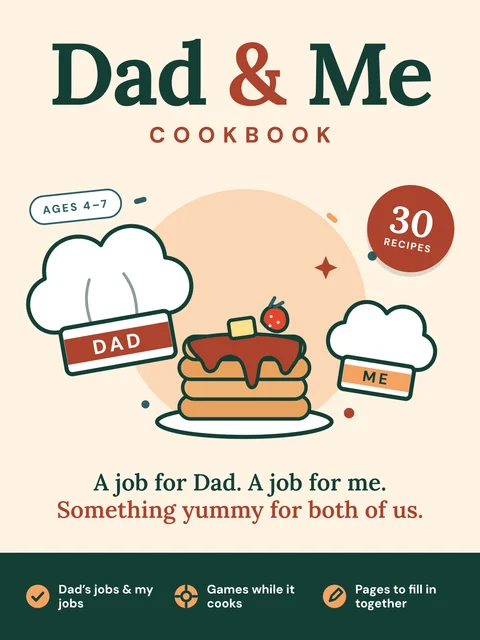
Dad, what are
we cooking today?
30 recipes to make together. A job for each of you, games while it cooks, and pages to fill with your kitchen memories.
- Dad’s job. Your child’s job. Everyone has a place beside the bowl.
- Something to talk about. A question to get the conversation going.
- Games while it cooks. Make the waiting part of the fun.
Targeting Christmas 2026 · $19.99 USD · Full-color paperback · 8.25 × 11 inches

The Little
Night Noise
A story to read. An adventure to choose.
Read the free storyA noise in the night.
What should Fennec do?
In The Little Night Noise, Fennec hears something outside. You read; your child chooses whether he listens from the cushions or looks from the doorway.
“I feel worried. I don’t know what’s making that sound.”
- 01Five minutes: read and choose
A complete short story, with a choice your child can say or point to.
- 02One feeling, in words they can use
“Worried” gives you a word to notice together.
- 03More time? Keep going together
Try a question, print the Courage Card, or listen for sounds in the room.
Read online free. Get the printable PDF with an adult email; future emails are optional.
The Dad’s Corner.
Answers to everyday questions.

A walk. Seven little games.
A bird, a shadow, a sound. Find something to play along the way.
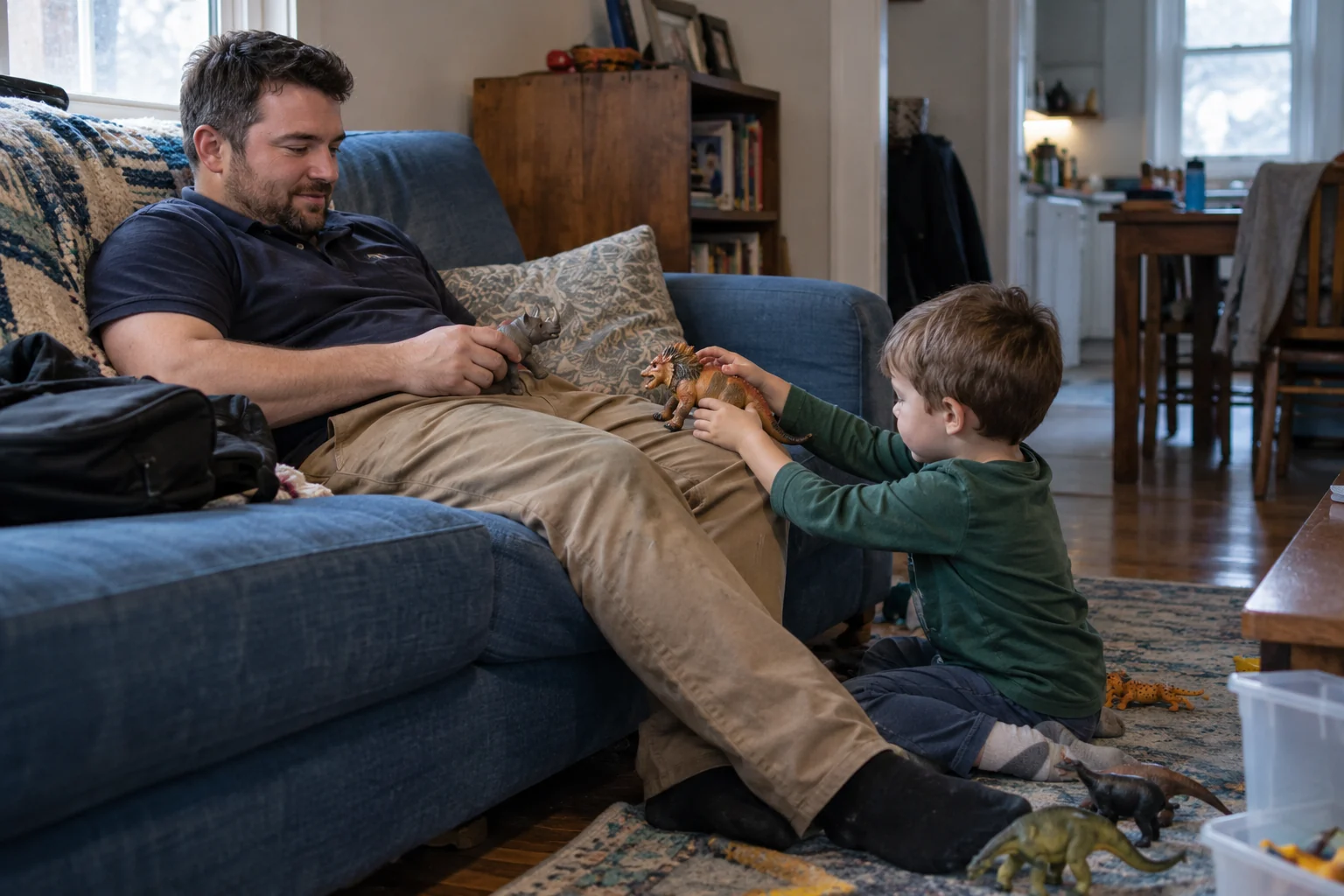
Too tired to chase? Try these 7 games
Join your child on the floor or from a chair, with ideas that leave room for their own.
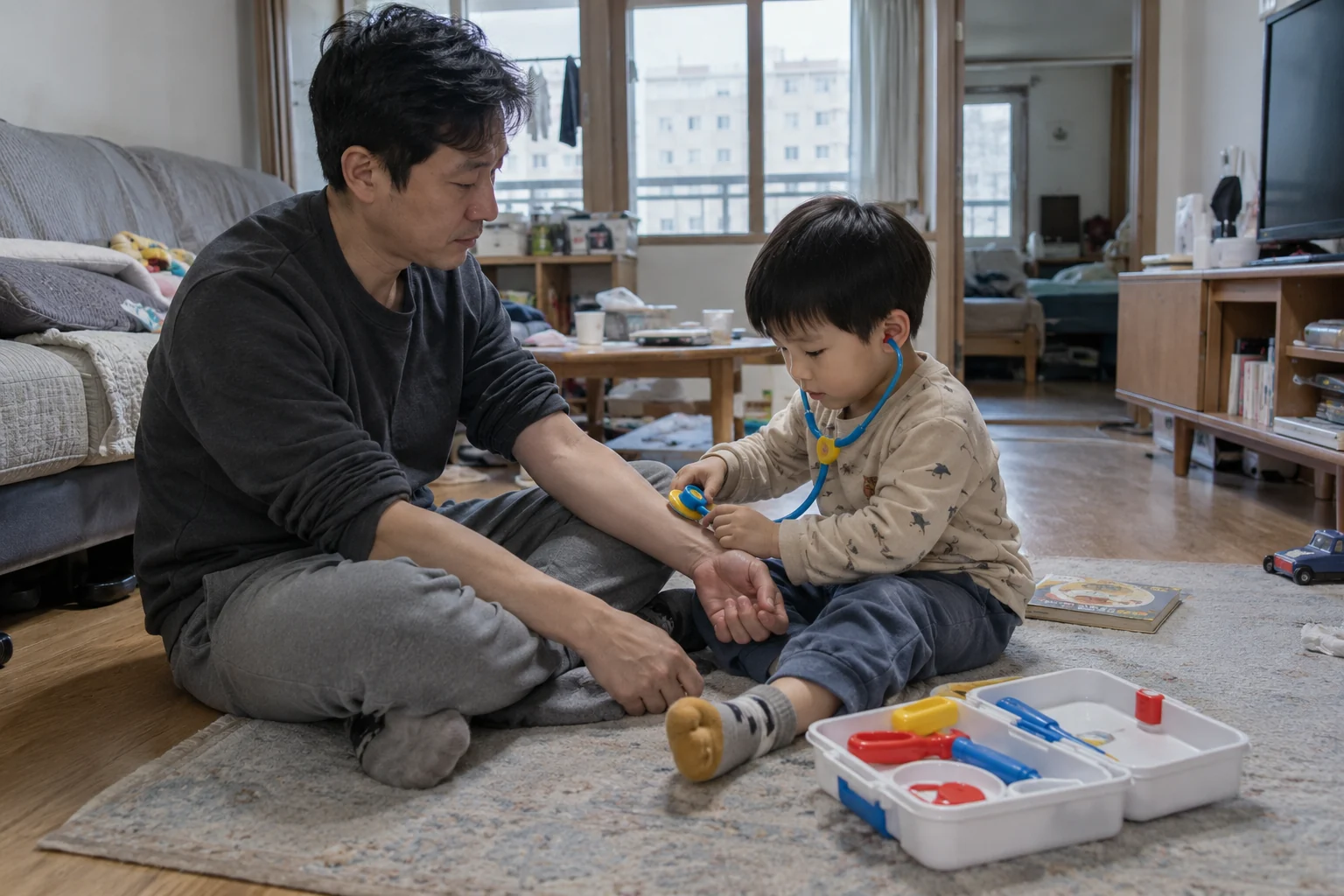
Not sure what to say in their game?
Be the customer, the patient or the pirate. Five ways to get a game going together.
Ready to try.
Still in the works.
What can I do on this site?
Pick a five- or ten-minute activity, read the free story, or browse the Dad’s Corner articles. Each activity lists what you need, the steps, and something you can say to get started.
What age is this for?
The activities and free story are for ages 3–5. The upcoming English-language cookbook is for ages 4–7, with an adult. Each resource states its own age range.
Can I buy the cookbook yet?
The English paperback is planned for Christmas 2026 at $19.99 USD. It is not on sale yet. Join the updates list for the purchase link.
What’s planned for the cookbook?
30 recipes for ages 4–7, with jobs for each of you, a shared question and activities while food cooks. The free bedtime story is already available separately.
Do I need to buy anything to get started?
No. The activities, articles, and online story are free. Each activity lists any everyday items you’ll need.
Can I print the free story?
Read and print the online story freely. The separately laid-out 13-page PDF asks for an adult email; future emails are optional.