
Am I the “Fun Dad”? How to Share the Less Fun Parts of Parenting
You can be the dragon and the person who remembers tomorrow’s spare clothes. Start with one ordinary job you can handle from beginning to end.
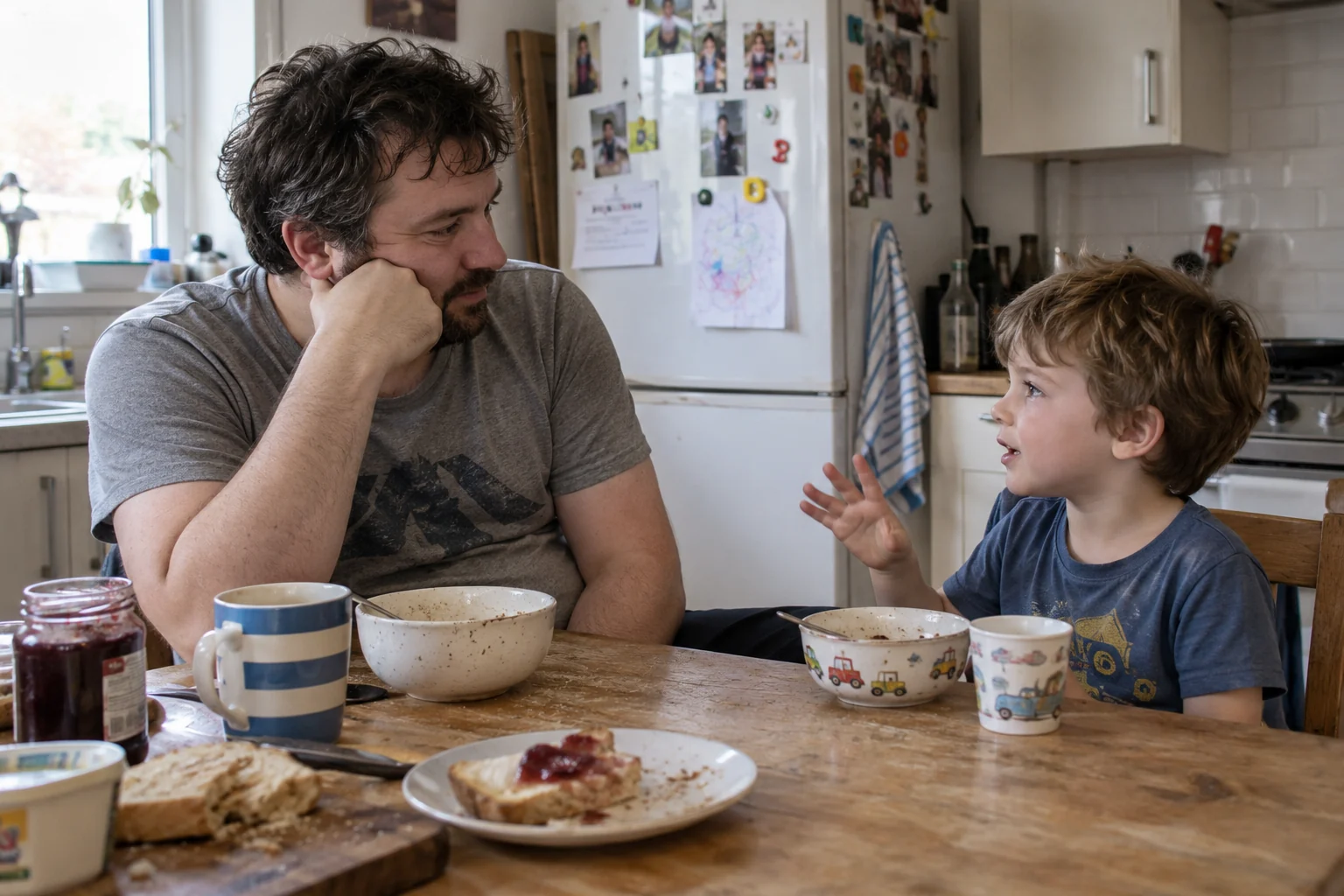
You’ve spent twenty minutes being a dragon. Your child is shrieking with laughter. Then your partner appears in the doorway.
‘Have you packed the preschool bag?’
You haven’t. You weren’t thinking about the bag. You were being a dragon.
There is nothing wrong with that game. But if one parent regularly gets to be the dragon while the other remembers tomorrow’s spare clothes, it is worth looking at how the jobs have landed.
You can keep the fun and take responsibility for more of what makes family life work. Start with one recurring job, including the thinking that comes before it.
Look at what happens around the fun
‘Fun dad’ is a loose label, not a description of every father. Plenty of dads already handle the appointments, meals, and early starts. In other families, these jobs are shared differently, or one parent is doing them alone.
If the label does feel familiar, consider yesterday evening. Who knew when play needed to end? Who noticed there were no clean pajamas? Who remembered the form preschool needed back?
A systematic review published in Sex Roles distinguishes the planning and remembering involved in household work from the visible tasks themselves. It found a recurring gender imbalance in this mental work across the studies reviewed. That describes a pattern in research, not a verdict on your relationship.
For your family, the useful question is narrower: which things would stop happening if the other parent stopped reminding you?
Take one job from beginning to end

‘Tell me what to do’ sounds willing. It can still leave your partner responsible for noticing, deciding, and checking.
Instead, agree on something specific: ‘I’ll handle the preschool bag on the evenings before I do drop-off.’
That includes finding out what belongs in it, checking tomorrow’s plans, replacing the spare clothes, and leaving it where you can find it. If the information lives in an app, learn where to look.
Ask what you genuinely need to know at the start. Then put reminders somewhere you will see them. A phone alert or a checklist by the door can help you handle the next morning without another prompt.
Choose a job that fits your actual schedule. A reliable Tuesday routine is more useful than promising every morning when you leave for work before everyone wakes up.
Be the parent who ends the game sometimes
If you begin the wrestling match, you can also help it finish.
‘Last dragon chase. Then I’m taking you to brush your teeth.’
That is different from ‘Go ask Mom whether we can play more.’ Bedtime does not always have to begin with your partner interrupting your game.
The Raising Children Network describes parenting teamwork as agreeing on approaches and supporting one another, including around family rules. You do not have to use identical voices or turn every routine into a joint operation. You do need some shared understanding of what happens when play is over.
If you disagree, talk about it later, away from your child. Backing each other up does not mean accepting frightening or harmful behavior; safety still comes first.
What if your child wants the other parent?
You announce that you’re doing bedtime. Your child protests. Your partner knows the exact order of the songs and could probably finish in half the time.
Before you begin, agree on a plan together. Find out the parts of the routine that matter to your child. Keep those familiar while you learn your own way through it.
‘Mom’s having her shower. I’m helping you with pajamas, and then we’ll choose a book.’
This may take practice. If either of you needs to step in, you can adjust without deciding the whole arrangement has failed. For a more detailed look at that particular difficulty, read our guide to a child who only wants Mom at bedtime.
Make the conversation about this week
‘You think I do nothing’ is a conversation that can go on all evening. ‘Would taking over the bag and drop-off actually make your mornings easier?’ gives you something to work on.
Pick a quiet moment and ask about one pressure point. You might discover that your partner is happy doing bath time but tired of organizing everything that has to happen before it.
If you parent in two homes, start with the routines you handle in your own home and coordinate the essentials your child needs between them.
Try an arrangement for a week. Then ask whether it removed work or merely changed who did the last step. You do not need a spreadsheet unless you both find one useful.
There is still room to be a dragon
The American Academy of Pediatrics describes fathers’ involvement as extending across their children’s care and development. Play belongs in that picture. So do the parts that produce very little applause.
Tomorrow, you might pack the bag before the chase begins. Later, you might be the person who says the dragon has one final flight before toothbrushes.
Your child still gets the game. Your partner gets an evening with one fewer thing to keep in mind. And you get to know the ordinary details of your child’s day.
For simple ways to spend time together, see our activities for dads and children ages 3–5. If ending the game is the hard part, our guide to helping a preschooler stop playing offers examples to try.
Sources and further reading
[1] Reich-Stiebert, Froehlich & Voltmer — Gendered Mental Labor, Sex Roles (2023)
[2] Raising Children Network — Raising Children as a Team
[3] HealthyChildren.org — Childhood Looks Better When Dad Is in It
General ideas for family life; seek individual professional advice for concerns about your child.