
“Five More Minutes!” How to Help Your Preschooler Stop Playing
One last slide turns into three. Make the ending easier to understand, help with the next step, and keep the boundary when your child still wants to play.
You gave the warning. You gave another warning. Now you’re standing by the playground gate with a bag over one shoulder while your child starts climbing the ladder again.
‘Five more minutes!’
Leaving the park can be hard even when the visit has gone well. Your child has to stop something absorbing and do something less appealing. You have to get home, start dinner, and somehow get a small person through a gate.
For a preschooler who struggles with transitions, a useful starting point is to make the ending clear, offer a manageable next action, and follow through. That can make a difficult change more understandable. It does not guarantee a cheerful goodbye.
First, figure out which part is difficult
Is your child upset about leaving the game, worried someone will knock down their building, or reluctant to go somewhere noisy? Those are different problems.
A child may be absorbed in a favorite activity, uncomfortable with change, or worried about what comes next. The same refusal can have different causes.
Start by watching what happens around this particular change. Your child may leave the park easily one day and struggle the next.
If the same change goes badly every day, ask when things begin to unravel. Before lunch? At the crowded preschool entrance? When a sibling touches the toys being put away?
Give the game an ending your child can recognize
‘Soon’ leaves a lot open to interpretation. A small, visible ending may be easier to work with.
At the park: ‘One last trip down the slide. Then we’ll get your scooter.’
With toy cars: ‘Park the red car in its garage. Then we’re washing hands.’
With a drawing: ‘Finish that window, and we’ll leave the picture here for later.’
Give the warning early enough for your child to finish that small action. Adjust the examples above to the game they are actually playing.
Choose an ending you can actually allow. ‘Finish your castle’ may take much longer than you have.
Get close before giving the next instruction
Calling ‘Shoes!’ from the kitchen often produces very little movement. Go over, get your child’s attention without demanding eye contact, and say what needs to happen first.
‘Bring me one shoe. I’ll help you put it on.’
Try one familiar signal rather than layering on more warnings: a picture of the next activity, a short cleanup song, or a timer your child understands. Use the same cue on another day if it helps.
If the timer makes your child more distressed, you do not have to keep using it. The useful question is whether a cue helps them understand what happens next.
Save what can be saved
Sometimes the objection is very specific: ‘But you’ll break it!’
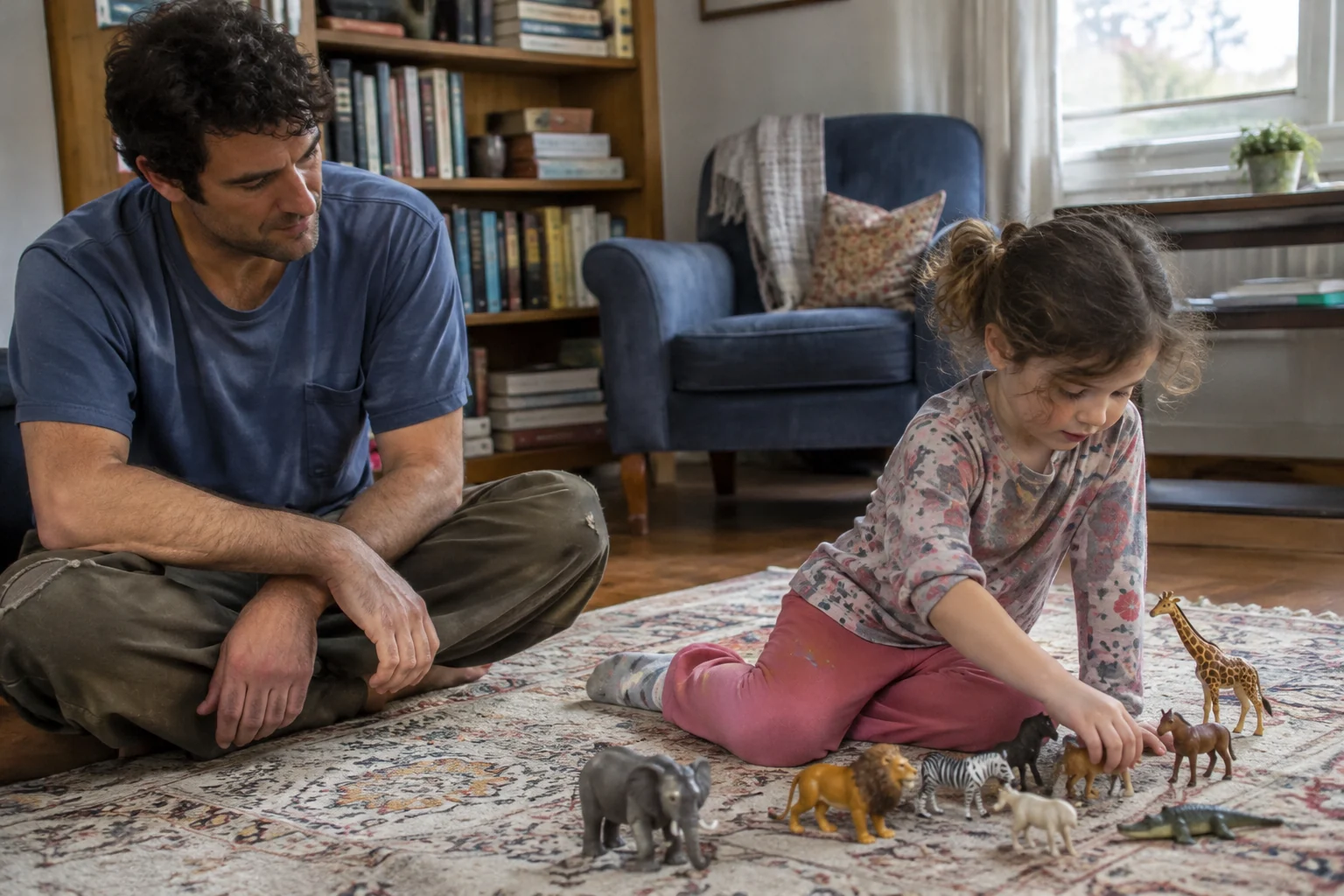
If there is space, leave the block building on a tray or agree on a shelf where an unfinished model can wait. You could take a quick photo of the construction if it has to be cleared.
Be honest about what is possible. ‘I can keep the tower here until after dinner’ is easier to honor than ‘Nobody will ever touch it.’ If another child shares the space, include that reality too.
You may discover that your child needs help leaving their work unfinished, rather than another explanation of why dinner matters.
When the answer is still no
A warning is preparation, not an agreement to keep extending the activity.
‘You wanted another turn. We’re leaving now. Would you like to carry the ball or shall I?’
Offer a choice about the next step, if there is a real choice. Avoid asking ‘Are you ready to go?’ when staying is not available.
Your child can be angry about leaving. You can acknowledge that and still prevent hitting or keep them away from a road.
If they are very upset, use fewer words. At home, you might sit nearby while they settle before helping with a shoe. Outside, keep them with you in a safe spot away from traffic while you prepare to leave. This is usually a poor moment for a lesson about how long you stayed.
What if every transition ends in a meltdown?
For a few days, notice one recurring transition: what came before it, what you asked, and what happened next. Try changing one thing. Perhaps the warning comes earlier, the instruction gets shorter, or you leave before your child is exhausted.
If transitions repeatedly cause severe distress, interfere with daily life, or concern preschool staff too, discuss the pattern with your child’s pediatrician.
A workable first goal is small: your child still says ‘I don’t want to,’ but understands what happens next and gets a little help doing it.
If getting dressed is the change that holds up your morning, our guide to a preschooler who won’t get dressed looks at that situation in more detail. For the walk home, try our walking games for dads and preschoolers.
Sources and further reading
[1] Child Mind Institute — Why Do Kids Have Trouble With Transitions?
[2] ZERO TO THREE — Temperament: Reaction to Change
[3] Child Mind Institute — How Can We Help Kids With Transitions?
[4] ZERO TO THREE — Limits for Little Ones
General ideas for family life; seek individual professional advice for concerns about your child.