
My 4-Year-Old Is Scared of the Dark. What Can I Say at Bedtime?
The sweatshirt on the chair looks different with the light off. Here are some words to try, a small plan for tonight, and signs that it’s time to ask for help.
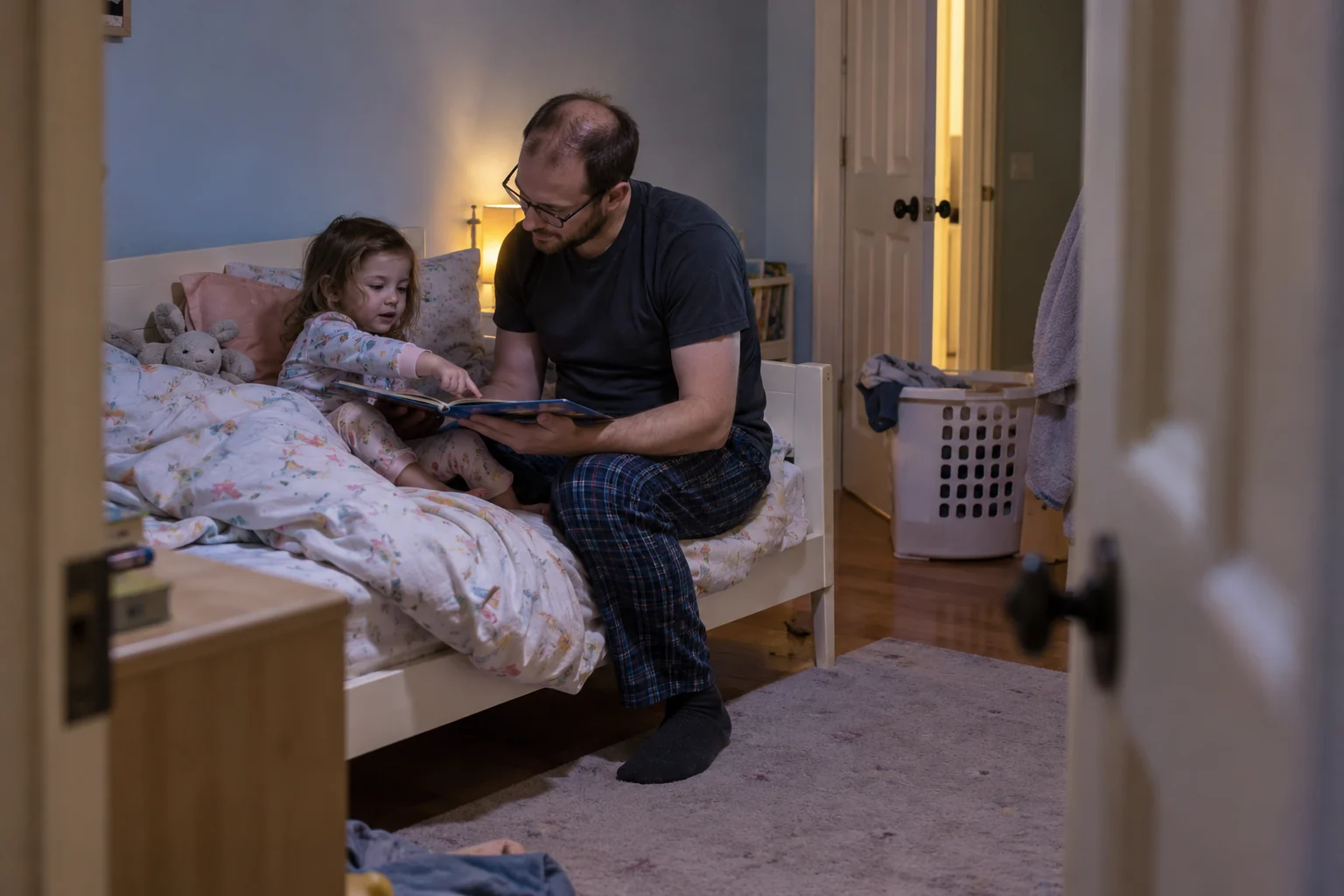
The light goes off. You make it halfway to the door.
‘Dad? What’s that next to my chair?’
It’s a sweatshirt. You know that. Your child may know it too, with the light on. But in a dark room, a sleeve can look remarkably like an arm.
When a preschooler is scared of the dark, start by acknowledging the fear, explaining anything concrete they have noticed, and keeping the next step small. You do not need to convince them to feel brave before you can help them settle.
Start with what your child is actually afraid of
‘Scared of the dark’ can mean several things. The room looks different. There is a noise outside. A scene from a cartoon keeps coming back. Or your child does not want you to leave.
Ask a small, open question: ‘What feels scary in here?’ If they point, look where they are pointing. If they cannot explain, let it rest rather than offering a list of possible dangers.
Try: ‘That shape looks strange in the dark. It’s your sweatshirt on the chair. Let’s hang it up.’
Or: ‘You don’t like being in here when I leave. I’m listening.’
What can I say when my child keeps calling me back?
At the fourth call, ‘There’s nothing there!’ is an understandable response. It also leaves you arguing about the room while your child is asking for reassurance.
Choose words you can repeat without turning each visit into a new conversation:
‘You’re in your bedroom. I’m nearby. It’s time to rest.’
If your child asks where you will be, be specific: ‘I’ll be in the living room.’ If you say you will check in after putting the dishes away, do it. Avoid promising something vague just to get out of the room.
You can acknowledge the fear and offer a small next step: ‘I know this feels hard. We can try a little at a time.’
Keep it short and use your usual voice. You can repeat the same reassurance when your child needs to hear it again.
Deal with a shadow without starting a monster hunt
If there is a particular shape or sound, investigate that ordinary thing together. Move the coat. Notice the curtain lifting above the radiator. Listen to the washing machine from the hallway.
Avoid making a habit of searching every closet for imaginary creatures. It can suggest that there really is something to find.
‘Let’s see what is making that shadow’ gives you something real to look at. ‘Let’s make sure the monsters have gone’ introduces a problem you cannot finish checking.
Pick one small adjustment for tonight
A dim nightlight or a familiar stuffed animal may help. Let your child choose where the bear goes, rather than offering five new bedtime arrangements.
You might say: ‘Would you like Bear next to your pillow or beside your blanket?’
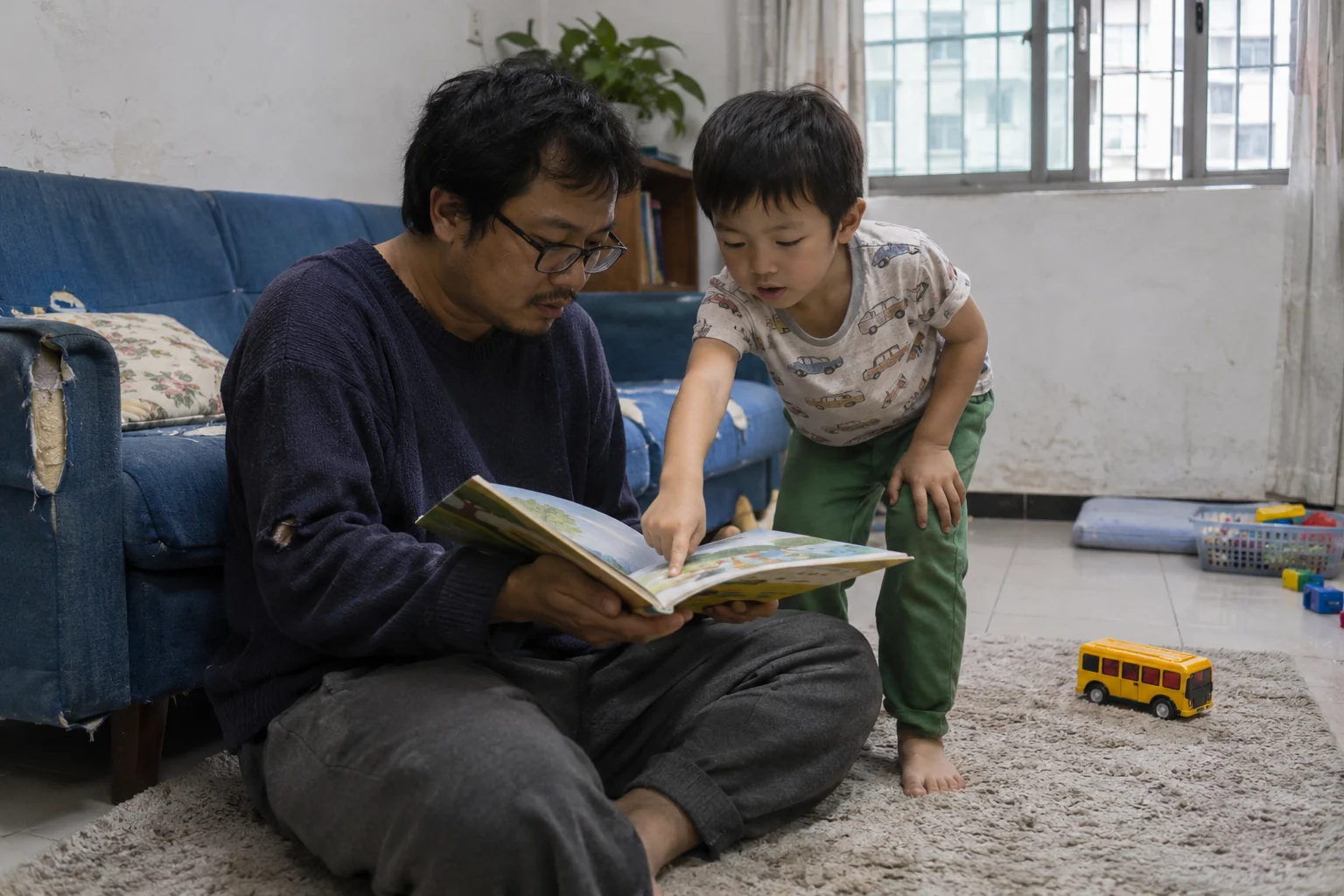
Keep the rest of the evening familiar. Read a book they already enjoy. If you want ideas for making that time more interactive, see our guide to reading with a preschooler who won’t sit still.
During the day, when nobody is trying to fall asleep, you can try a brief, playful experience of dim light together. For example, look at the ceiling with a flashlight, then lower the light for a moment if your child is willing. There is no need to switch everything off and insist they get used to it.
Should I stay until my child falls asleep?
A frightened child may need you close for a while. If you stay, be clear about what you are doing and choose a plan you can sustain. An abrupt exit followed by a long argument rarely feels like a useful plan at midnight.
If your child needs you beside them to fall asleep every night and that arrangement is no longer working for your family, ask their pediatrician how to reduce the support gradually. There is no single departure schedule that suits every child.
When bedtime fears need more help
Talk with your child’s pediatrician if fear regularly disrupts sleep, causes intense distress, or spreads into daytime activities. Mention when it began, what your child says, and what happens at bedtime.
For tonight, you can keep the task modest: understand one worry, make one practical adjustment, and follow through on what you say you will do. Tomorrow, when the room is bright again, you can talk a little more.
For a related bedtime difficulty, read My 3-Year-Old Only Wants Mom at Bedtime. What Can Dad Do?
If you’d like a short story about an unfamiliar nighttime noise, read The Little Night Noise together online.
Sources and further reading
[1] Cleveland Clinic — Is Your Child Afraid of the Dark?
[2] Children’s Hospital Colorado — Helping Kids Overcome a Fear of the Dark
[3] Mpedia — Les peurs fréquentes et irraisonnées chez l’enfant
[4] Seattle Children’s — Nighttime Fears
General ideas for family life; seek individual professional advice for concerns about your child.