
Dad, How Do You Read With a Preschooler Who Won’t Sit Still?
Your preschooler interrupts, skips pages or walks away during stories? Try practical ways for dads to share books with active 3- to 5-year-olds.
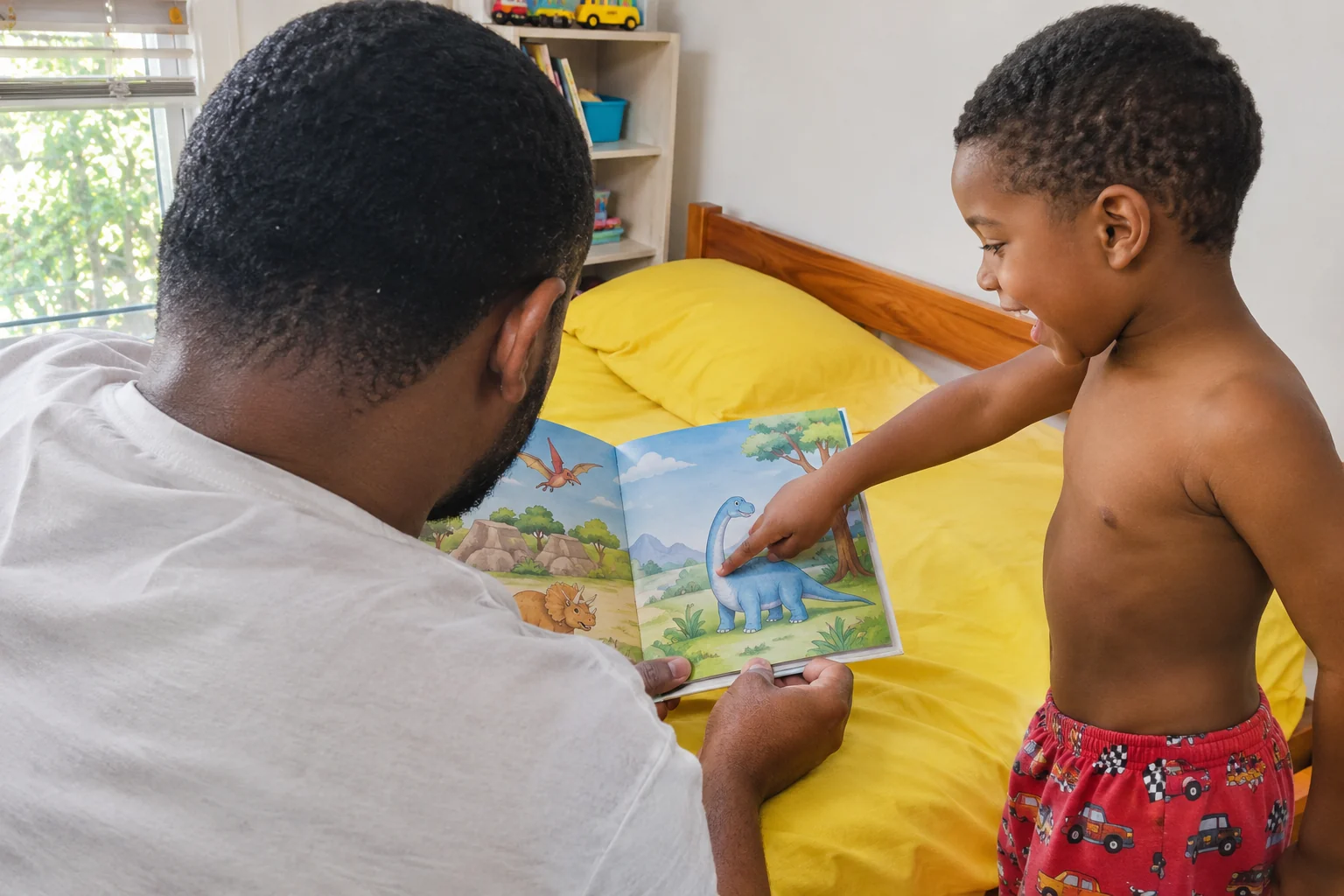
Let your child change position, point at pictures and help with the voices. Choose a book they want to open and start with a few pages. You can read standing by the sofa, sitting on the rug or taking turns making the animal noises.
You open the book. Your child gets down, comes back, skips three pages and asks where the dog went. You can work with that. Start on the page they want to see.
You might have imagined the two of you curled up with a book. Your child seems more interested in finding one dog on every page. Start there. You can talk about the dog, follow it through the pictures and still have a good time with the book.
Does your preschooler have to sit still to enjoy a story?
Find a comfortable place with room to move: beside you on the sofa, standing by the book or lying on the rug. Keep the pictures within view.
Notice whether there is an exchange. Your child might point at the missing dog, repeat a funny word or return to see the next picture. If they move away, you can read a little more and see whether they remain interested, without making them come back. If they start a completely different activity and are no longer sharing the story, it is fine to close the book.
The American Academy of Pediatrics’ preschool book-sharing guidance includes children asking questions, talking about pictures and retelling familiar stories. Those exchanges belong in reading time. You can pause to hear your child’s idea before continuing with the words on the page.
What should you try before opening the book?
Offer two books you are happy to read and let your child choose. Look for something that matches a current interest: buses, insects, a character they know, a joke they keep repeating. A picture book with a few words on each page may work better today than a longer story you loved last week.
Check the timing. A child arriving home hungry may need food and a chance to move before they want a book. A child exhausted at bedtime may manage only a page or two. Try another ordinary moment, such as after breakfast, rather than deciding that reading must happen at night.
Try a simple invitation: “Want to look at this one with me?” Sit where you can both reach the pages, turn off background TV and put your phone aside. You may have more luck with a short, uninterrupted chance to explore the book than with repeated reminders to listen.
How can Dad make reading more interactive?
Follow a detail your child notices. If they point to a dog under a table, say, “He’s hiding under there.” Pause. Your child might tell you who the dog is hiding from, point at another picture or wait for you to read on. You can respond to any of those.
Build a little on what they say. If your child says “truck,” you might answer, “A logging truck. It’s carrying those tree trunks.” The picture helps explain the new words. Leave a pause for a reply, then carry on rather than asking them to repeat the phrase.
Literacy researcher Grover Whitehurst calls this kind of back-and-forth dialogic reading. The adult helps the child talk about the book and gradually take more of a storytelling role. You can mix conversation with straight reading, following what interests your child.
A 2007 What Works Clearinghouse review found benefits for preschool oral language from dialogic reading. The review did not find a clear benefit for phonological processing. The useful idea here is conversation around the book.
Choose a prompt your child can enjoy. A child using short phrases might prefer “Where’s the dog?” or filling in a familiar animal sound. A child who wants to tell you more might enjoy “What do you think he’ll do next?” If they shrug, add your own thought and read on. There is no need to ask something on every page.
What if your child interrupts or skips pages?
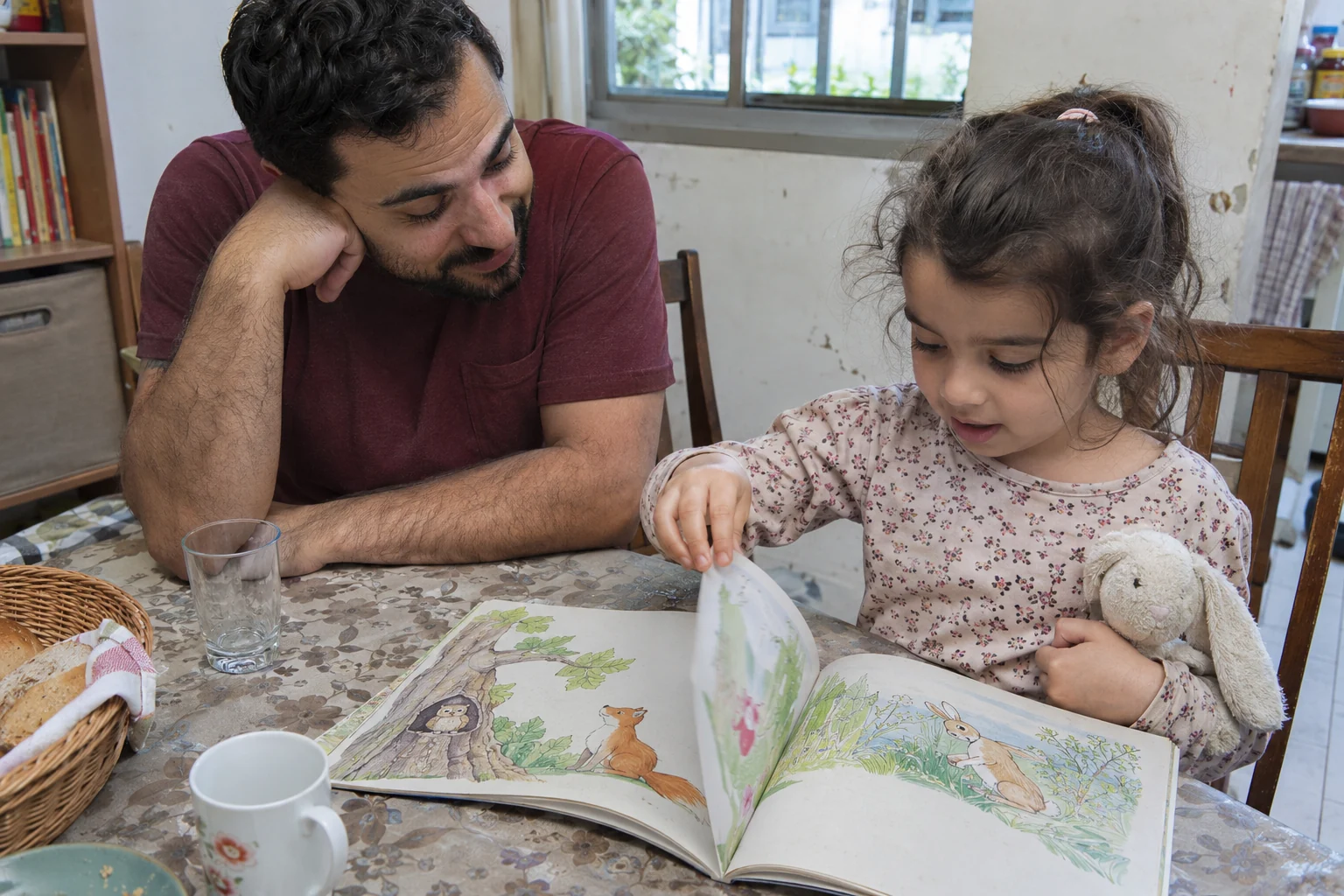
When the interruption concerns the story, respond. “Why is she sad?” may be the part your child wants to understand. You can talk about the picture before continuing. If it reminds them of something that happened at preschool, you can follow that conversation for a moment.
If they skip ahead, decide whether the missing page matters. You can summarize it in one sentence, read the part they chose or say, “There’s something funny here I want to show you first.” With a familiar book, looking at favorite pages may be the whole point of that reading.
If a question takes you away from the book, you can answer briefly and return: “Yes, we saw a dog like that at the park. Let’s see where this one goes.” If your child has something important to tell you, put the book down and listen.
If your child wants to act out the story afterward, try an idea from our guide to pretend play with your preschooler. A toy animal and a cushion can be enough to recreate the scene they liked.
Can you include movement without losing the story?
Choose one action already on the page. If the character tiptoes past a sleeping bear, invite your child to show you two quiet steps, then look at the next picture together. If the character knocks, your child can make the knocking sound on the rug.
Choose an action that fits the space. A knock on the rug or two tiptoe steps lets your child join in without moving far from the pictures. If they want to run and play instead, put the book aside and offer it again later.
For a lower-energy version, give your child the page-turning job or let a soft toy “listen” beside them. If you are tired too, our easy games for dads after work offer other ways to spend a few minutes together.
What if your child wants the same book every time?
Read it again if you both can. Familiarity gives your child a chance to anticipate a line or notice something they missed. You can leave a brief pause before a repeated word and let them supply it if they want to.
If you want a change, take turns choosing: “Your rabbit book first, then I’ll pick one.” You can also revisit the favorite in a different way. Let your child tell you a page from the pictures while you listen, or look together for a detail neither of you mentioned before.
How long should reading last, and when should you seek advice?
Start with a few pages and see whether your child wants more. The AAP’s read-aloud advice says even a few minutes together count, and you can stop when a child loses interest. A short session you both enjoy gives you something to return to tomorrow.
Movement during one activity does not diagnose an attention disorder. If you have broader concerns about hearing, understanding language, communication or attention across everyday situations, bring specific examples to your child’s pediatrician. Mention what you notice at home and ask preschool staff what they see too.
For tonight, choose a short book and one way your child can join in. If you want to try ours, The Little Night Noise is a free interactive story with a simple choice to make together. You can pause at the choice, talk about it and stop there if that is enough.
If your child wants Mom to read and objects when Dad takes over, our guide to bedtime when your child only wants Mom covers ways to make that handover more familiar.
When the book is finished but shadows keep your child awake, our guide to fear of the dark looks at what you can say next.
Sources and further reading
American Academy of Pediatrics. “How to Share Books with Your Preschooler” and “Tips to Help Your Child Enjoy Reading Aloud.” HealthyChildren.org. Guidance on responding to questions, choosing books, repetition and stopping when interest fades; consulted November 3, 2026. · Read-aloud tips
General ideas for family life; seek individual professional advice for concerns about your child.