
My Preschooler Won’t Get Dressed: What to Try Before School
What to do when you need to leave, how to spot an uncomfortable sock, and one way to practice dressing without the morning rush.
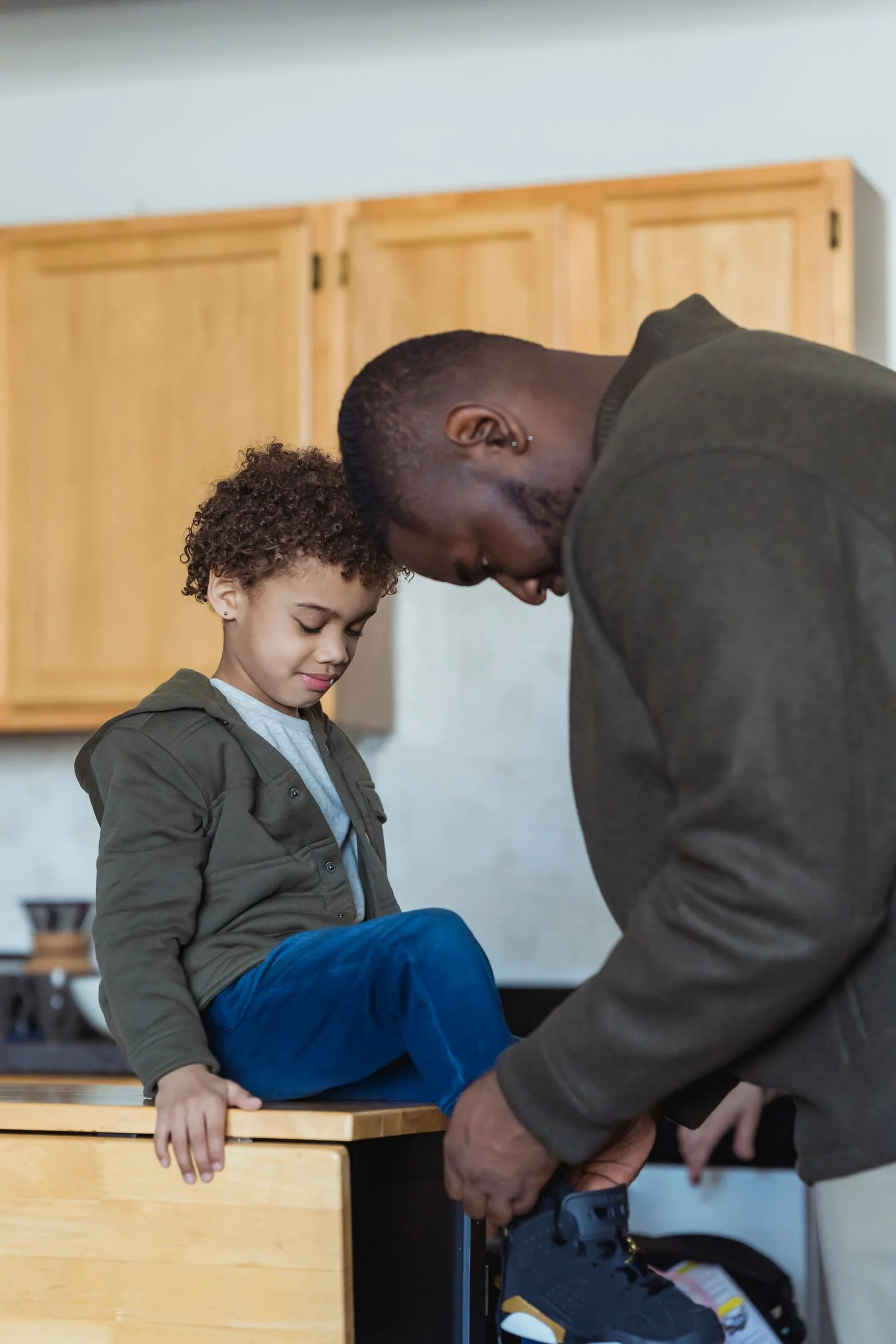
The shirt is on the floor. Your child wants to stay in pajamas, and you need to leave for preschool.
When your preschooler refuses to get dressed, offer two comfortable outfits, name one step, and help with the difficult part. Save independent practice for a quieter time. These are starting points from Raising Children Network’s dressing guidance.
What to try when you need to leave
Here are a few ways to put that advice into words:
- Offer two choices. Put two shirts where your child can see them. “The striped one or the dinosaur one?” If neither feels comfortable, check what is bothering them before offering another.
- Ask for one action. “Put this arm in,” while you hold the sleeve open, gives your child a smaller job than “Get dressed.”
- Split the work. “I’ll get the shirt over your head. You pull it down.” Help with the part they cannot manage yet.
- Explain when you need to help. “It’s time to leave. I’m going to help with your pants.” Pause if something hurts or your child becomes very distressed; do not force a limb through clothing.
You can help more today and practice tomorrow. There is no need to work on buttons while everyone is late.
Why won’t my preschooler get dressed?
Watch where the process stops. The problem might be a twisted sleeve, an itchy seam, a fastening they cannot manage, or a toy they do not want to put down. The next step depends on which one you see.
Match the help to the difficulty
| What you notice | What to try |
|---|---|
| A sleeve or waistband gets stuck. | Straighten the clothing and start that part. Let your child finish pulling it into place. |
| The same socks or shirt cause trouble. | Check the seams, tag, fabric, and fit. Offer a familiar comfortable item. |
| Your child wobbles while putting a foot through. | Have them sit down for socks or for putting their feet into pants. |
| Your child cannot tell front from back. | Point out a picture on the front, or add a small mark inside the back. |
| A toy keeps pulling their attention away. | Try a quieter spot with the clothes already beside you. |
Dressing involves balance, working out which way clothes face, remembering the order, and pushing and pulling in the right direction. Sitting down removes the need to balance on one leg while putting a foot into clothing. The occupational therapy team at Cwm Taf Morgannwg recommends this for socks and pants.
If clothes seem uncomfortable, ask, “Show me which part.” Check for a rubbing tag, a scratchy seam, or a waistband that digs in when your child sits. Children and Family Health Devon suggests familiar fabrics and seam-free clothing where those issues apply.
Make a short getting-dressed routine
Keep the clothes in reach and use a simple picture sequence. Raising Children Network recommends a visual guide showing the dressing steps.
Our getting-dressed order
- Underwear
- Shirt and pants
- Socks
- Shoes; jacket if needed
Draw an item beside each step, or use photos of the clothes. Point to the next picture as you go. Adapt the order around breakfast and toothbrushing; outdoor shoes can wait until you reach the door.
If Dad and another caregiver share mornings, agree on the same sequence so either person can use it. For other routines you can share, see seven rituals with your preschooler.
Teach the last step first
Pick an unhurried time to work on one part of dressing. NHS occupational therapy guidance recommends practicing away from the school-morning rush and explaining the actions simply.
One approach is called backward chaining: you begin the task and your child finishes it. As they learn, you do less of the beginning. NELFT describes this way of breaking down dressing tasks.
For example, start with a sock:
- You put the sock over the toes and heel; your child pulls up the top.
- Once that is manageable, stop at the toes and let them work it over the heel too.
- Gradually leave more of the task for them, helping again when needed.
This sock example is a way to use the method, not an age-based timetable. Stay with one step for as long as your child needs. You might say, “You pulled it over your heel,” so they know which part they just did.
Putting clothes on a doll or stuffed animal is another way to practice the order. Our guide to pretend play has ideas for joining in.
Set out tomorrow’s clothes tonight
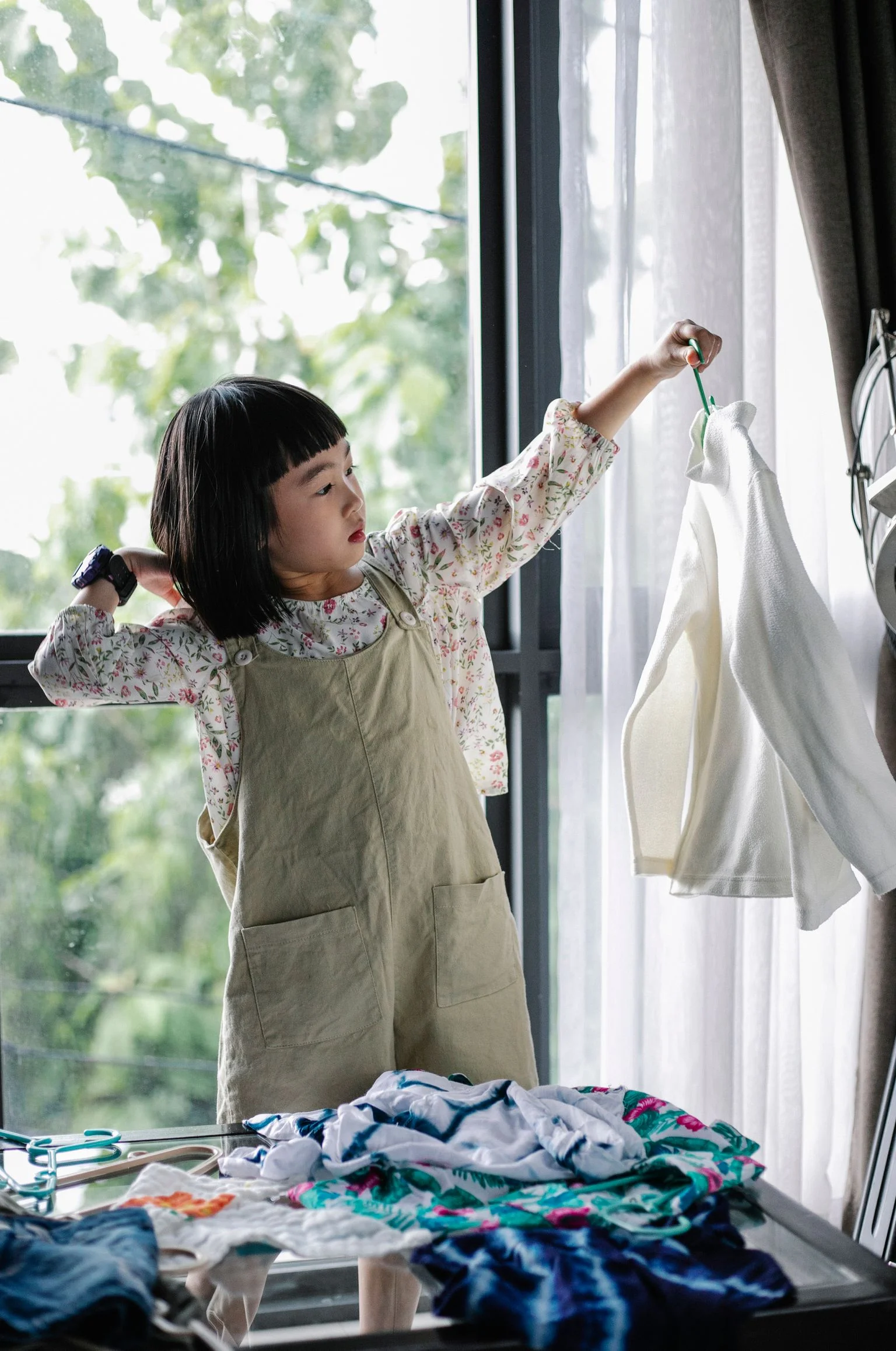
Choose the outfit together and put it in one basket, including socks. Elastic waistbands, roomy openings, and simple fastenings make fewer demands than tight clothing or fiddly buttons.
Keep one comfortable backup nearby. If the chosen shirt feels wrong in the morning, you already have another option.
Common questions about preschoolers and dressing
Should a 3-year-old get dressed without help?
Not necessarily for a whole outfit. The CDC’s 3-year checklist includes putting on some clothes, such as loose pants or a jacket. It does not say that every 3-year-old should manage all their clothes and fastenings alone.
What if my child only wants one outfit?
Check what they like about it: the fabric, fit, or a familiar feature. When the difficulty is tolerating new clothes, Devon’s occupational therapy guidance suggests introducing them for short periods while keeping familiar clothing available. Try that at home before relying on a new outfit for school.
When should I ask for help?
Talk with your child’s pediatrician if dressing causes persistent pain or distress, or if their skills concern you. If they lose a skill they previously had, raise that promptly. The CDC advises discussing developmental concerns rather than waiting for them to resolve on their own.
If you shouted during the rush and want to come back to it later, our guide to apologizing after yelling offers a starting point.
Sources and further reading
The example phrases, sock practice, and routine above are Dad & Me Time’s editorial examples. These sources support the guidance; none has reviewed or endorsed this article.
1. Raising Children Network: Getting dressed—helping children learn.
2. Cwm Taf Morgannwg University Health Board: Learning to get dressed.
3. Children and Family Health Devon: Dressing techniques for sensory differences.
4. NELFT NHS Foundation Trust: Self-care resources—dressing.
5. CDC: Milestones by 3 Years.
General ideas for family life; seek individual professional advice for concerns about your child.