
I Yelled at My Child. How Can I Apologize and Reconnect?
Yelled at your child and unsure what to say? Simple apologies for ages 3–5, ways to reconnect, and a practical plan for handling the next hard moment.
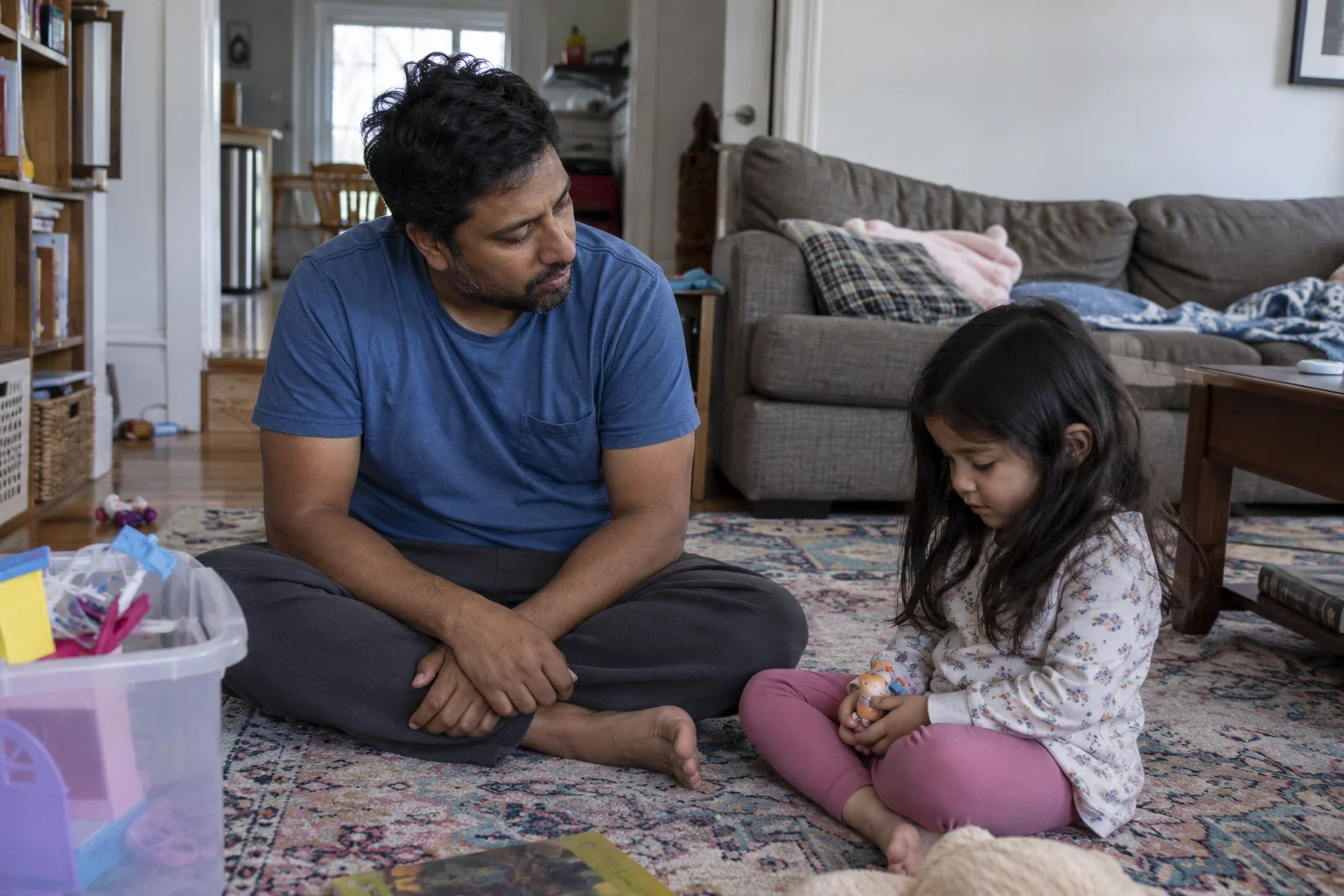
Once you can speak calmly, say what happened: “I yelled. I’m sorry. I should have spoken more quietly.” Listen, keep the necessary boundary, and choose one thing you will do differently next time.
You asked for the cars to be put away. Then you asked again. The third time, you shouted. The room went quiet. Start with a small, honest apology.
You wanted some time together, and the evening went somewhere you regret. You can begin without a speech: acknowledge the yelling, listen to their response, and follow through on what you will do differently.
First, get calm enough to talk
If your voice is still rising or you are about to return to blaming, pause. Keep your child safe. Ask another available adult for a clear handoff; otherwise, stay nearby and use fewer words while you settle.
Try, “I’m still upset. I’m going to take a breath here, then come and talk to you.” A 3-year-old should not be left responsible for another child during your break.
The American Academy of Pediatrics advises parents to take time to calm themselves and return to the child after a mistake. Its guidance recommends avoiding yelling and humiliating language.
What can you say to a 3–5-year-old after yelling?
Use a short apology in your own words: “I yelled earlier. I’m sorry. I should have spoken more quietly.” You can name something you saw: “You jumped when I shouted.”
Early childhood specialist Rebecca Parlakian recommends stating what the adult did in simple terms without making the child responsible in the next sentence. The apology concerns your response.
When you were rushing to get out
“I yelled about your shoes. We were late, but I should have spoken differently. Next time, I’ll come over and show you what still needs doing.”
Keep responsibility for your voice with you, even when the morning was rushed.
When your child had hit or thrown something
“I shouted very loudly. I’m sorry. I’m going to stop the hitting, and I can do that without yelling.” Move an unsafe object or create enough distance to protect everyone.
You can apologize while keeping the rule. AAP guidance distinguishes clear limits from hurtful responses; your child still needs to know what is allowed.
When you used a hurtful label
Be specific about what you are taking back: “I called you bad. I should not have said that. You threw a toy, and we need to deal with it, but that word does not describe who you are.”
Say it once, clearly, then listen.
What your child does not owe you afterward
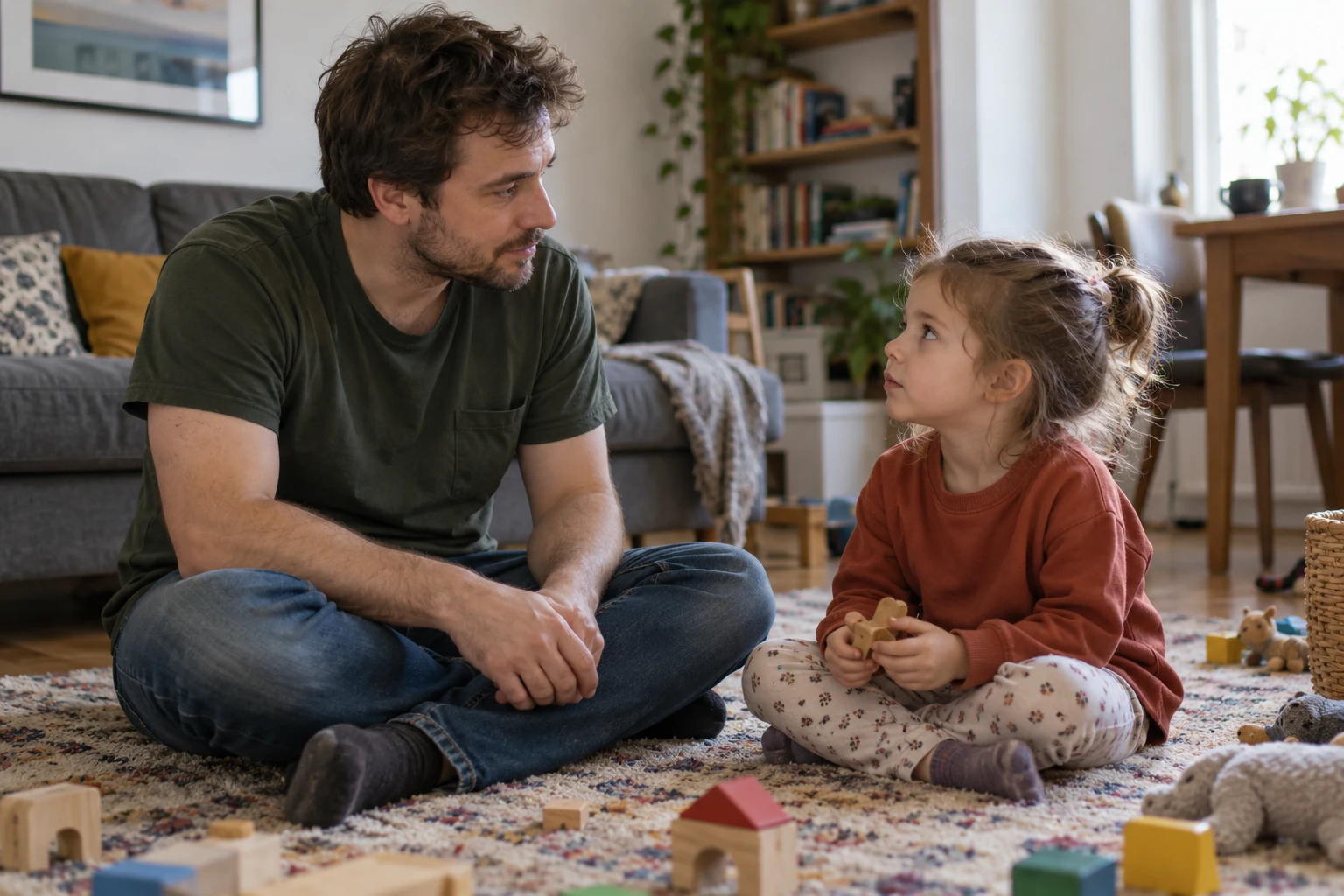
Your child might cry, keep playing or stay quiet. Give them time: “Would you like me here, or a little farther away?”
If they want a hug, welcome it. If they move back, give them room. Stay available without requiring proof that everything is resolved.
Take a longer conversation about your regret to another adult. “I’m a terrible dad. Tell me you love me” asks your child to reassure you when you are trying to return to them.
Listen without restarting the argument
“You scared me.” You might answer, “My yelling scared you. I understand you’re still upset.” Let them finish before explaining what you wanted to happen with the toys.
In Child Mind Institute guidance, clinical psychologists Lindsey Giller and Stephanie Samar emphasize waiting until a child is more able to engage before discussing an outburst. Long explanations are not useful during overwhelming emotion.
If your child says, “You always shout,” listen rather than counting the evenings when you did not. Try, “It feels like this happens a lot. I’m going to get help changing it.” Only say that if you will act on it.
Return to ordinary time with Dad
When they are ready, return to something ordinary: the puzzle, the planned book, the bridge on the rug.
“Would you like to finish our bridge?” opens a possibility. If they say no, there will be another opportunity. You are not trying to erase the argument in ten minutes; how you act through the rest of the evening matters too.
Our low-energy games to play together offer simple starting points. Your child does not need to accept a game for your apology to count.
Plan one different response for next time
Choose a specific situation where you often yell: leaving home, dinner, or ending play. Pick one adjustment you can actually make tomorrow. Walk over before speaking instead of calling across the kitchen, for example, or warn that play is ending before you begin cleanup.
Prepare a line for yourself: “I’m getting louder. I’ll stop and lower my voice.” Ask your co-parent for a handoff before you reach your limit. When you are the only adult there, simplify what you can instead of adding instructions.
If yelling is recurring, you humiliate or threaten your child, or you fear you might hurt them, seek support from a doctor, therapist, or parenting service. For immediate danger, arrange safety with a trusted adult and contact local emergency services. An apology needs to accompany changes in what happens to your child.
If the argument began during physical play, revisit the boundaries before trying again. Our guide to roughhousing and knowing when to stop offers ways for each of you to call a halt.
Questions dads ask
Will apologizing undermine my authority?
You can take responsibility and keep the rule: “I’m sorry I yelled. The cars stay on the floor.” You show how to own a mistake without putting your child in charge of setting the limit.
What if my child does not seem to have noticed?
You can still acknowledge the yelling briefly, then let them return to their activity. They do not have to show a particular emotion for the apology to matter.
Should I explain that I am tired?
“I’m tired, and I got upset. It’s my job to take a break.” Then make a practical plan for that break.
I yelled during a game. How do we start again?
Acknowledge your response first. Later, offer a shorter or cooperative game. Our article on whether to let your 4-year-old win helps you choose a suitable challenge when playing gets tense.
If you keep hearing your own father’s phrases in these moments, read our guide to changing familiar parenting habits.
Sources and further reading
[1] American Academy of Pediatrics. What’s the Best Way to Discipline My Child?
[2] Rebecca Parlakian, PBS KIDS for Parents. “I’m Sorry:” Apologizing to Your Child (2015).
General ideas for family life; seek individual professional advice for concerns about your child.