
Why Does My 4-Year-Old Only Listen When I Yell?
Get close, ask for one clear action, then check what is getting in the way before repeating yourself.

You ask for the toys to be put away. Nothing happens. You ask again while clearing the table. By the fourth time, you are shouting. Now your child starts moving, and you are left wondering why getting louder seems to be the only thing that works.
If your preschooler appears to listen only when you yell, look at what happens before your voice rises. Get close, give one specific direction, and allow a short pause. Then check what is stopping them and follow through calmly. A louder voice can get an immediate response, but it does not show whether the earlier request was heard, understood, or manageable.
What changes when you start shouting?
Often, several things change at once. You stop what you are doing. You come into the room. You say your child’s name. Your request becomes shorter and more definite.
Those changes matter. A calm request called from the kitchen while your child is absorbed in a game is different from a direct request beside them. Before deciding that volume is essential, try bringing the other parts of that interaction forward.
Sometimes repeated requests also become background noise: the child has learned that action is not expected until much later. That is a pattern you can work on, without treating every delay as deliberate defiance.
Try the first request beside your child
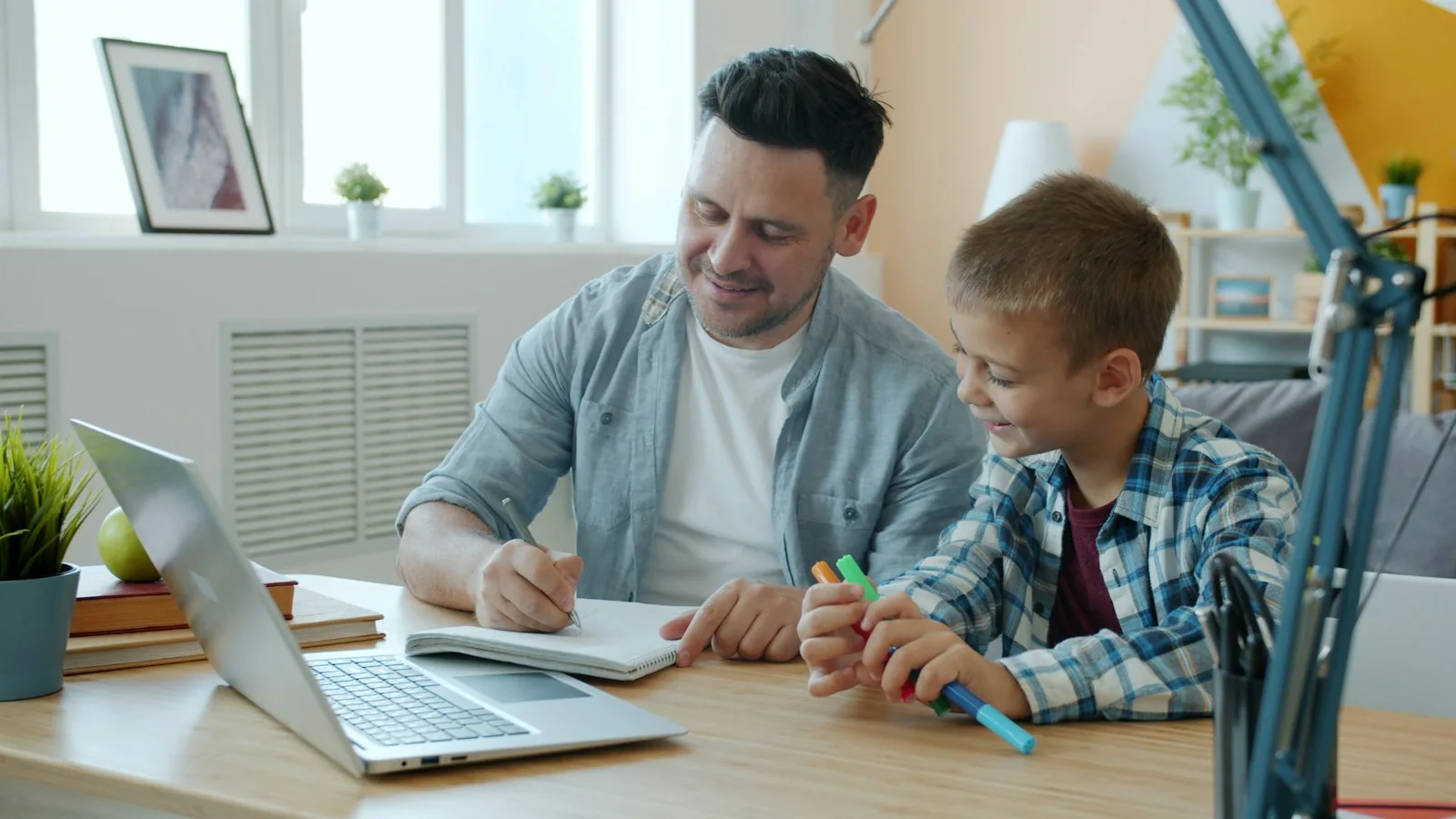
Walk over, say their name, and wait for a sign that you have their attention. They might look toward you, answer, or pause their play. You do not need to demand eye contact.
Then name one action: “Please put the red truck in the basket.”
Compare that with “Please clean up the toys and find your shoes because we’re going to be late.” A preschooler may need that larger job broken down. Once the truck is away, give the next direction.
You can point to the basket. You can demonstrate where something goes. Clear communication does not have to be entirely verbal.
Leave a pause before repeating yourself
After giving the direction, wait a few seconds. Try not to fill the pause with three new instructions or a warning that you are about to get angry.
If nothing happens, check: “Did you hear me? The truck goes here.” Then look at the obstacle. Is your child unable to open the basket? Still building something? Refusing because they do not want to stop?
Those situations need different responses. Help with the lid. Explain where the unfinished construction can stay. Or calmly keep the limit: “You want to keep playing. It’s time to leave. The truck needs to go in the basket.”
For the difficulty of ending a game, our guide to preschool transitions goes into more detail.
Following through without getting louder
Pick a request you can stay with. If the game must be packed away before the next activity, remain nearby and help your child begin if needed. A limited choice can be useful: “Will you put away the truck or the blocks first?” Both options need to be acceptable to you.
If a toy is being thrown, secure the situation: “The truck stays on the floor. I’m putting it away for now.” Keep any consequence related, brief, and appropriate to your child’s age. Do not use food, affection, or humiliation as leverage.
You are allowed to sound firm. You can mean what you say without building up to a threat. Also check whether you have given an instruction where you actually meant an invitation. “Would you like to help me?” allows a no. “Please put your cup on the table” communicates a task.
Practice with an ordinary shared job
Try this during something less rushed than the morning departure. While setting the table, ask for one manageable action: “Please put a spoon beside this plate.” Wait, then acknowledge it: “Thanks. That’s ready.”
A familiar kitchen job can give both of you a chance to use a shorter exchange. Do not turn the activity into a listening test or keep issuing directions once your child has had enough. You are practicing how you communicate as well.
What if you yell anyway?
Stop when you notice. Lower your voice and take responsibility: “I shouted. I’m sorry. I’ll say it again.” Repeat the request simply, if it still needs doing.
Avoid “I’m sorry, but you wouldn’t listen.” The apology does not need your child to accept responsibility for your volume. Our article on apologizing after yelling covers that conversation more fully.
Changing a familiar pattern usually takes practice. One calm request followed by refusal does not mean you have proved that shouting is necessary.
When to look beyond instructions
If your child often seems not to hear, has difficulty understanding familiar language, loses skills, or struggles with directions across settings, discuss it with their pediatrician. Hearing, language, attention, and developmental differences can all need assessment. Persistent or dangerous outbursts also deserve support.
If your own anger is frightening you or your child, ask for help with that, too. Parent support can be practical: someone can help you work through the exact point where a daily request becomes a shouting match.
For the next routine, choose one thing to change: give the first request close enough to be heard. You can work on the rest from there.
Sources and further reading
How to Give Effective Instructions, Child Mind Institute. Clinical expert Karol Espejo, LCSW; clear, direct, age-appropriate requests.
Tips for Giving Directions, Centers for Disease Control and Prevention. Guidance for toddlers and preschoolers on attention, manageable directions, and follow-through.
Discipline, American Academy of Child and Adolescent Psychiatry. Respectful limits, realistic expectations, and proportionate consequences.
Illustrative photos: Vitaly Gariev / Unsplash ; Vitaly Gariev / Unsplash.
General ideas for family life; seek individual professional advice for concerns about your child.