
Cooking With Your 3–5-Year-Old: 12 Real Kitchen Jobs to Do Together
Your preschooler wants to help cook? Try 12 kitchen jobs for ages 3–5, with adult prep, practical safety advice, and easy things to say while you work.
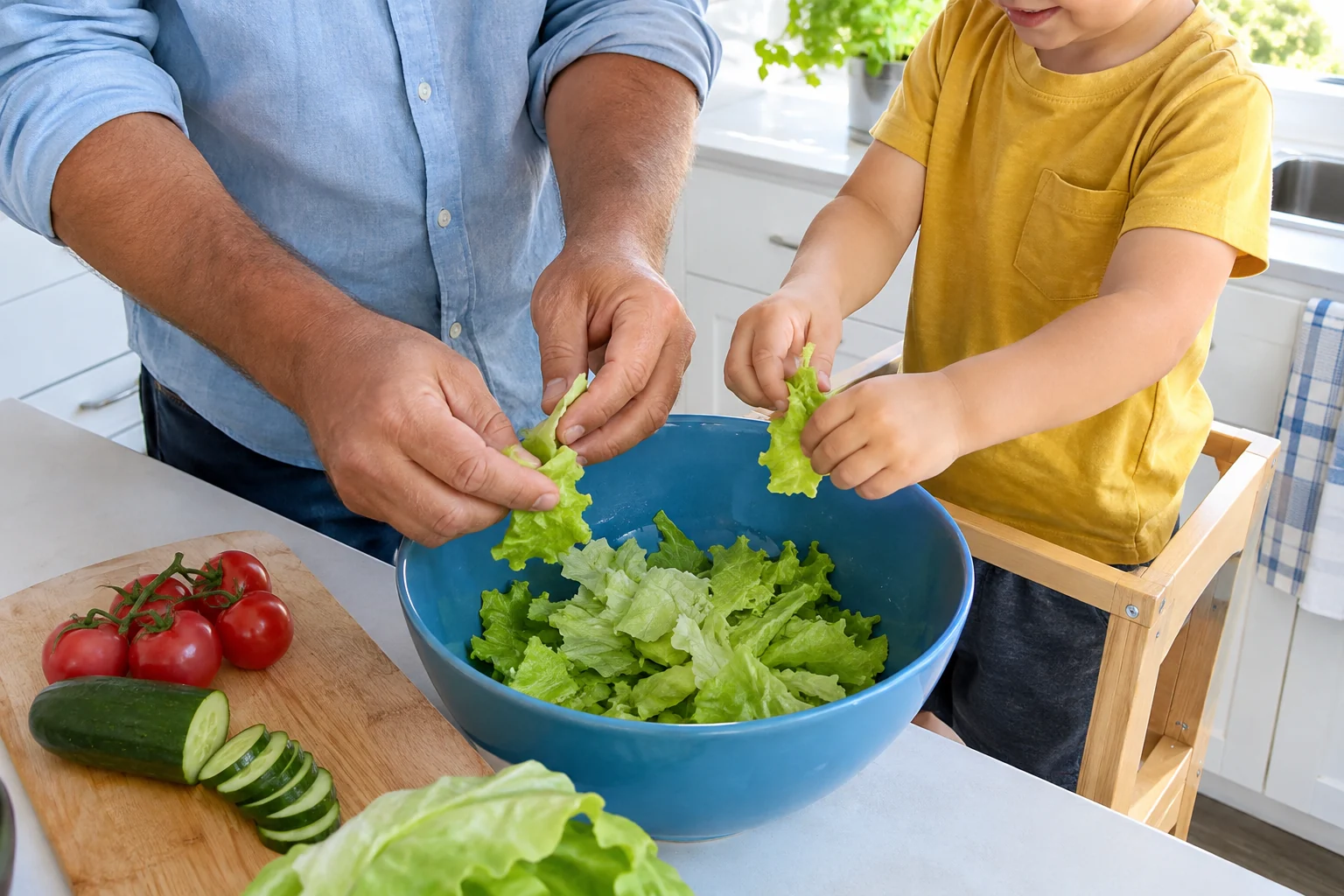
“Can I help?” Dinner is halfway started, the pan is hot, and your child is already dragging a chair across the floor. Set them up at a low table with a bowl and one ingredient. Tonight, the salad is their department.
One job, one bowl. Start your preschooler with washing a zucchini, tearing lettuce or mashing a ripe banana. You handle sharp knives, the stove and anything hot. Stay beside them, then add another job when the first feels easy.
Your child stirs the sauce, you taste it when it is ready, and together you decide whether it needs a little lemon. They show you their work; you are making the same meal. One job is enough to get started tonight.
What can a 3-year-old or a 5-year-old do?
University of Illinois Extension suggests washing, pouring, stirring and mashing for younger children, with measuring and rolling dough among later steps. Choose a job your child can manage and supervise it.
Start with a task you can demonstrate in one move: “I’ll hold the bowl. You stir.” If spills are frequent, use less or choose a larger container. Before introducing a tool, notice whether your child can hold it, follow your demonstration, and stop when asked.
Set up a small kitchen station
Set up a child-height table or stable equipment made for the job, well away from the oven and stove. Put out a light, unbreakable bowl, one utensil and a small amount of food.
Wash hands first. Health Canada recommends at least 20 seconds with soap and water, and washing produce under running drinking water. Keep your child’s ready-to-eat ingredients and utensils separate from raw meat, fish, and eggs.
12 kitchen jobs to choose from
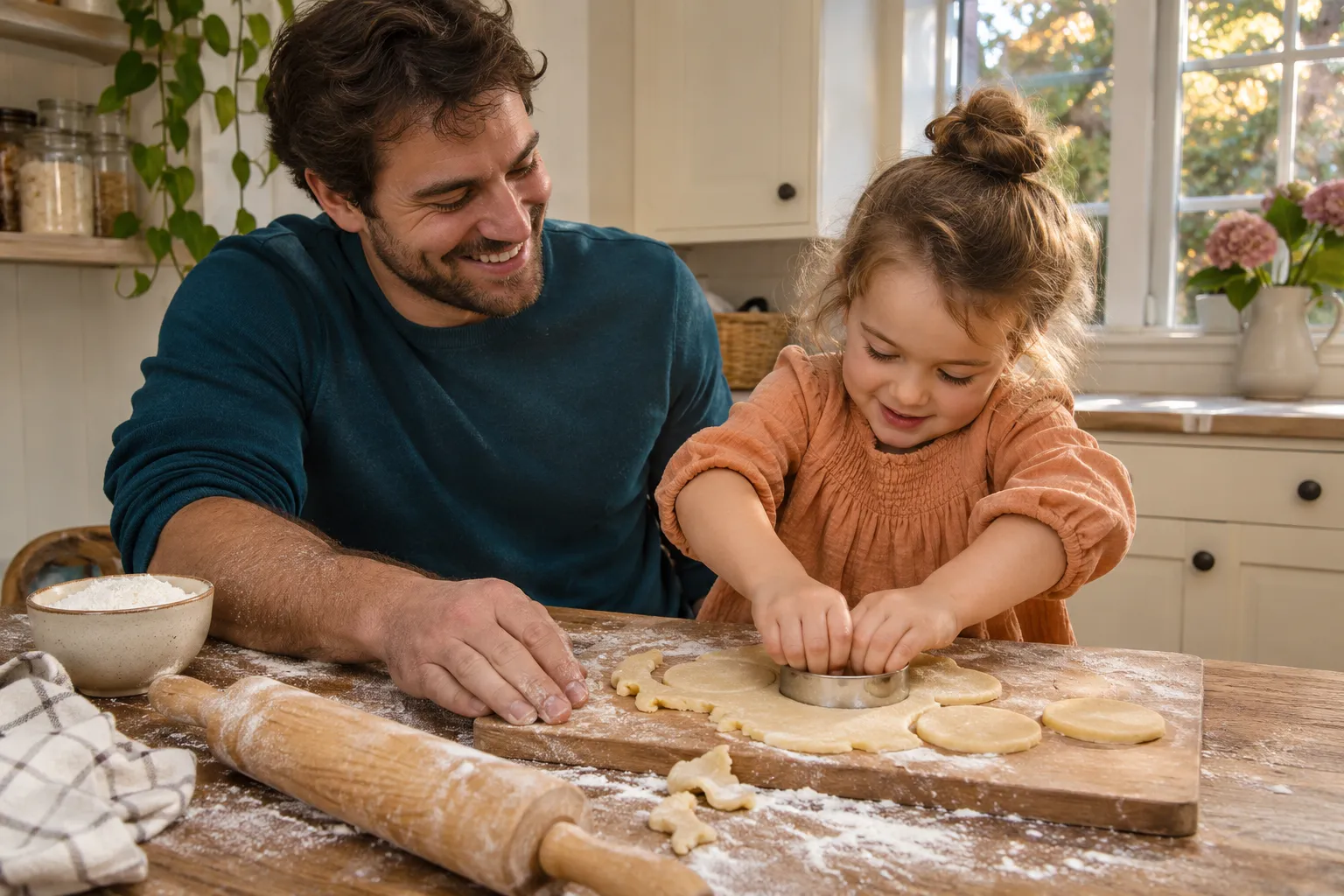
1. Wash fruit and vegetables
You control the water and stay beside them. Your child turns a zucchini under cool running water. Finish washing and preparing it yourself. Food does not need soap.
2. Tear lettuce leaves
Wash the lettuce, then give your child a few leaves to tear into a bowl with clean hands. The pieces can be different sizes; you can adjust the serving afterward.
3. Pour a measured ingredient
Measure water or yogurt into a small, light container. Your child pours it into a wide bowl. Use a small amount and steady the bowl if needed.
“I’m holding the bowl. You can pour slowly.”
4. Stir a cold sauce
Prepare ingredients for a yogurt sauce or dressing, taking account of family allergies. Your child stirs with a spoon. A large bowl and small quantity make the movement easier.
5. Mash a ripe banana
Peel and cut the fruit. Your child presses the pieces with a fork while you stay close. A stable plate and soft banana require less force.
6. Pick herb leaves
Wash the herbs and offer a small sprig of mint or basil. Your child pulls off the leaves. Check afterward for stems left in the bowl.
“Would you like to smell this one?”
7. Spread a soft topping
Prepare bread and an easy-to-spread topping suited to your child’s needs. Offer a small spatula or blunt spreader. Stay beside them and hold the bread if needed.
8. Arrange a cold filling
Prepare ingredients such as cooked, cooled vegetables to spread on bread that you will later warm in the oven. Your child distributes them with clean hands or a spoon. The dish stays cold during their part.
9. Squeeze a citrus fruit
Cut the orange or lemon and remove seeds. Help your child press a half onto a stable manual juicer. Check the juice before using it.
10. Add a spoonful of topping
Put a small amount of herbs or already-grated cheese in a bowl. Your child adds some to a cold dish before you carry it to the oven. You handle the grater.
11. Cut a very soft food, if ready
For a child ready to follow the movement, demonstrate cutting a peeled banana using an appropriate blunt tool on a stable board. Stay beside them. Illinois lists soft-food cutting among possible tasks for 4–5-year-olds, with supervision. If they need to force it, choose another job.
“Let’s put the fruit down. I’ll show you where your fingers go.” You can also cut while they transfer the pieces.
12. Put out napkins and suitable utensils
Choose light, unbreakable items without sharp blades. Your child puts a napkin at each place, then helps check what is missing.
What stays with the grown-up
Keep the stove, oven, hot liquids, and sharp tools with you. Announce a hot-food move: “I’m carrying something hot. Stay at the table.” Pause your child’s job if you can no longer supervise it.
Flour is a raw food. The FDA advises against tasting raw dough or batter, even without eggs, and against using raw-flour dough for play. Wash hands, tools, and surfaces afterward. Cold preparations without raw flour avoid this issue when you are starting out.
Check allergies and serve food in a size and shape your child can safely eat. You handle cooking and food-safety checks.
Make it time for the two of you
When you can, choose a meal you know how to make without rushing. Stand or sit beside your child and do one step together before moving on. They can watch how you do it, and you can see what they enjoy trying.
Let them choose the herb or arrange the vegetables. Tell them how you ate this dish when you were little. Then enjoy a few quiet minutes working beside each other.
If you enjoyed making something together, ask, “Shall we do this again on Saturday?” A sauce, topped toast, or a favorite salad can become something you both look forward to making.
When they spill, lose interest, or want to do everything
“The water’s on the table. I’ll get a cloth. You can hold the bowl.” A small spill can stay a small part of dinner. If you are rushed or frustrated, offer a task you can calmly supervise.
If they reach for the pan, hold the boundary: “The pan is my job. You can stir the sauce.” If they have had enough, finish without making them keep helping to please you. You can try again another day.
While dinner cooks, put the utensils away first. Then try a preschool conversation starter or let your child open a pretend restaurant using our simple pretend-play ideas. Watching the cooking remains your job.
If your child enjoys having a role alongside you, try the same approach outdoors or in a game. Our dad-and-child activities at home and outside can help you choose what to do next.
Spills, tasting and knowing when to stop
What is a good first recipe?
Try a cold assembly with few ingredients: topped bread, yogurt sauce, or a salad with food you have prepared and cut. Choose a familiar recipe so you can pay attention to your child’s part.
How long should my child help?
One step can be enough. Offer washing one vegetable or stirring a sauce, then see whether they want more. They do not have to stay for the entire preparation.
Will cooking together make them eat better?
Cooking gives your child a chance to get familiar with ingredients. Let tasting stay optional; the washing and mixing already helped make dinner.
What if dinner needs to happen quickly?
Offer a small nearby job such as setting out napkins. If that is not workable tonight, choose another time. Our low-energy games after work offer other ways to spend time together.
If you enjoy cooking together, it could become a regular occasion. Our guide to dad-and-child rituals explains how to choose something you both want to return to.
Ready to make a whole dish together? The Dad & Me cookbook is being developed for ages 4–7, with 30 recipes, jobs for each of you and something fun to do while food cooks. See the cookbook and join the updates list.
For a first snack together, try our five no-cook recipes to make with your child. Choose one preparation and give each of you a job.
Sources and further reading
[1] University of Illinois Extension. Cooking with Kids. Age-based kitchen task suggestions.
[2] Health Canada. Safe food handling for children ages 5 and under.
[3] US Food and Drug Administration. Handling Flour Safely: What You Need to Know.
General ideas for family life; seek individual professional advice for concerns about your child.