
Easy Christmas Cookies to Make With Preschoolers: One Dough, Three Ways
One dough, three decorating ideas, and a useful job for each of you once the cookies have cooled.
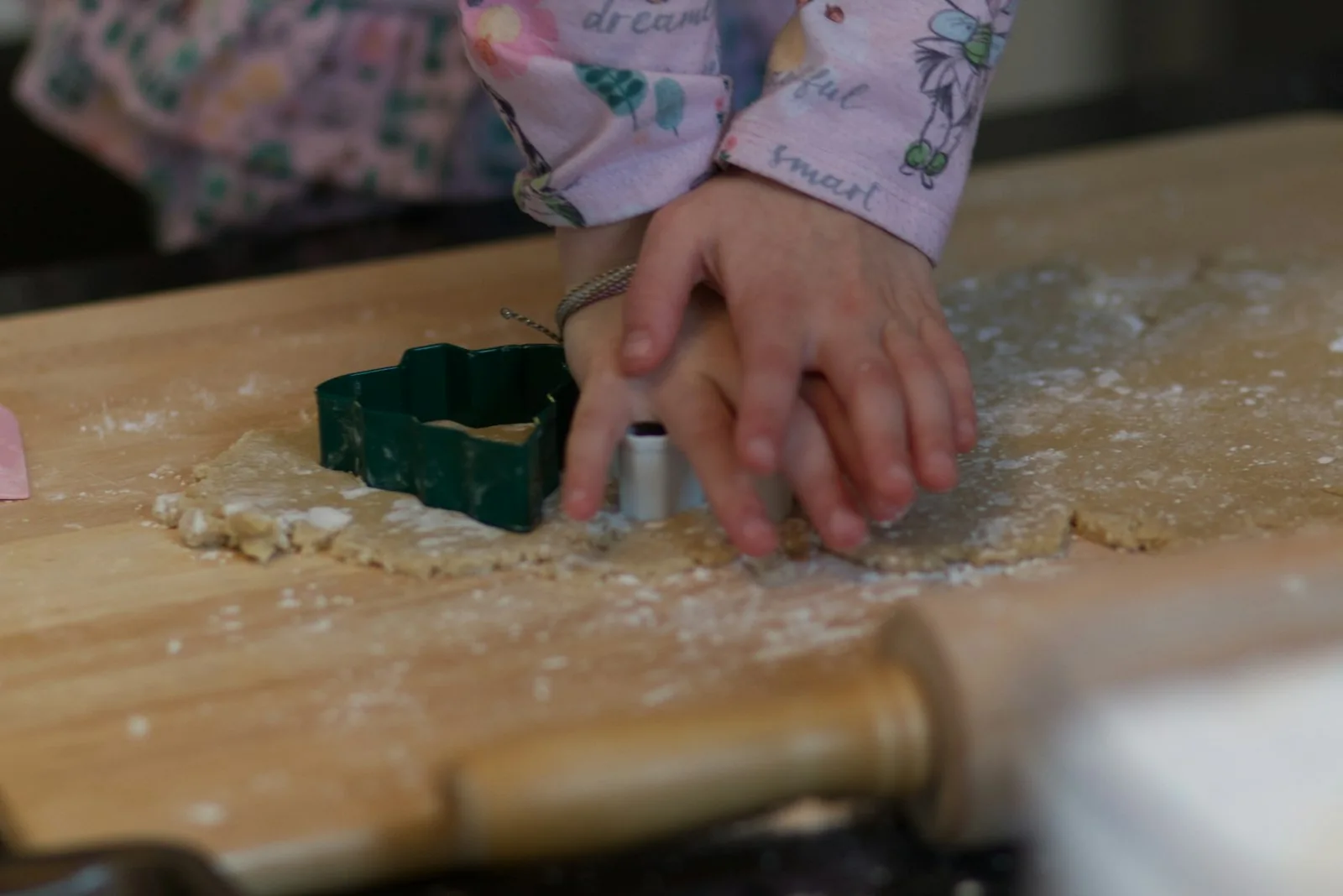
Start with one dough and a small batch to decorate
For Christmas cookies with a preschooler, choose a simple cutout dough and change the decorations instead of making several recipes. An adult handles the oven and raw ingredients; your child can choose shapes and decorate cooled cookies. Set aside an unhurried afternoon slot, and let your child join for the parts they enjoy.
You do not need a kitchen full of cutters. A round cookie can become a snowman's face or a Christmas ornament. Add a star cutter if you have one, and you have three options from the same dough.
The recipe below follows Nikki Brooks's Frankie’s Winter Wonderland Cookies for PBS KIDS for Parents. PBS lists it as a 90-minute activity, which leaves room for making, chilling, baking, cooling, and decorating. It is a reference recipe, rather than one tested by Dad & Me Time.
The cookie dough
Ingredients:
- 1 cup unsalted butter, softened (about 226 g)
- 1/2 cup granulated sugar (about 100 g)
- 1 egg yolk
- 2 cups flour (about 240 g)
- 1/4 teaspoon baking powder
- 1/4 teaspoon salt
- 1 teaspoon vanilla extract
- Optional icing and sprinkles for decorating
You will need two bowls, a spoon or mixer, a rolling pin, cookie cutters, plastic wrap, and baking sheets. The number of cookies depends on the size of your cutters.
The gram weights are approximate conversions using King Arthur Baking's ingredient chart, rather than a separately tested metric recipe.
- Beat the butter and sugar until creamy. Add the yolk and vanilla.
- Combine the flour, baking powder, and salt separately, then mix into the butter mixture to form a soft dough.
- Wrap the dough and refrigerate for 10 minutes.
- Heat the oven to 350°F. Roll the dough to 1/2 inch thick on a lightly floured surface and cut shapes.
- Bake for 12–15 minutes, until golden. Cool before decorating.
Keep the cookies similar in size and thickness so they bake evenly. If you want thinner cookies or different ingredients, use a recipe written for those changes rather than assuming the same baking time will work.
Three ways to decorate the same cookies
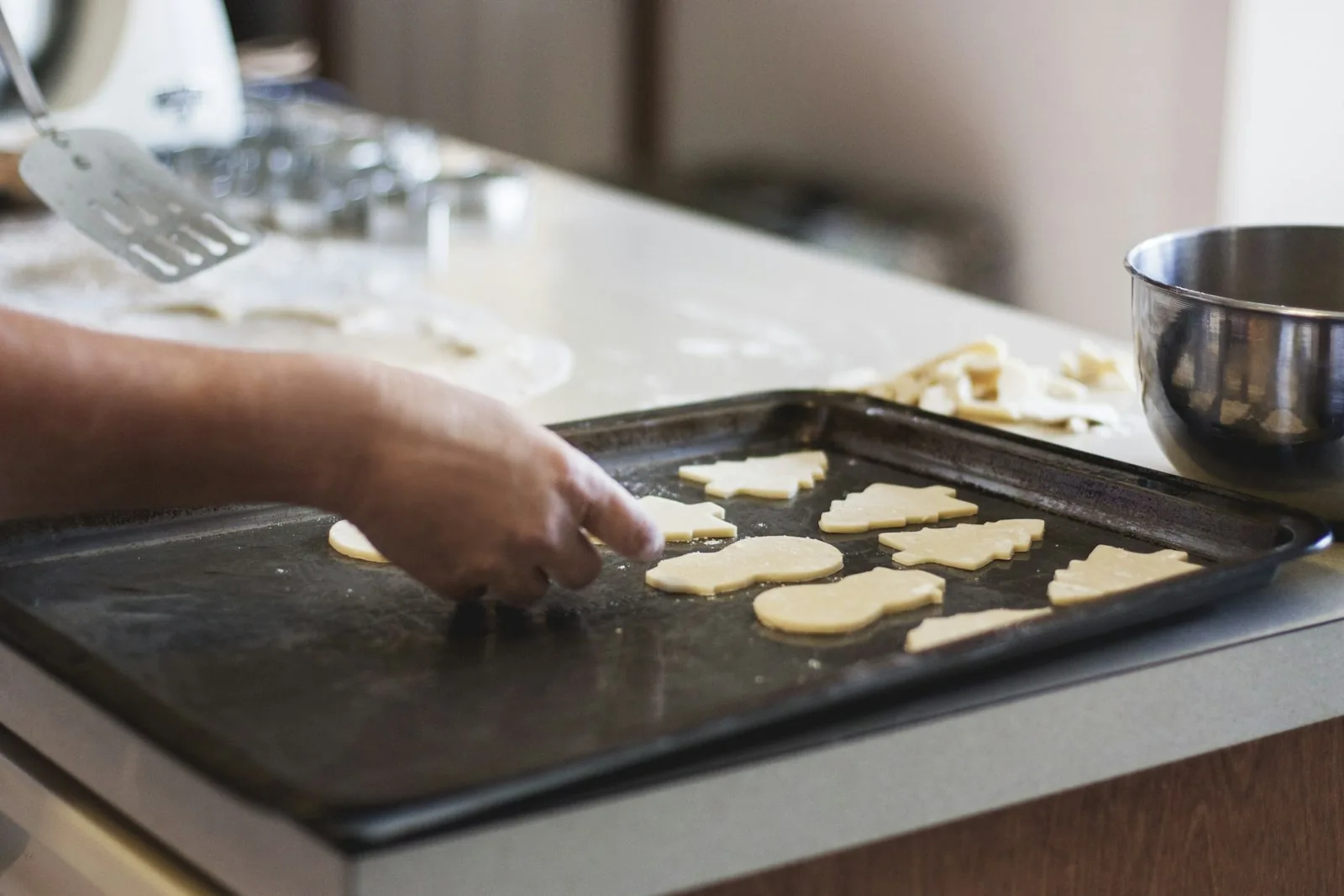
Use ready-to-eat icing or a recipe without unpasteurized raw egg. For younger children, use icing details instead of hard candy or whole nuts.
Christmas stars
Use a star cutter and let your child add a little icing with the back of a spoon once the cookies are cool. Put a small portion of sprinkles in a bowl so the entire container does not end up on one star.
Your child can choose whether every star matches. Dad can handle spreading the icing if that part becomes frustrating.
Snowman faces
Make round cookies. Spread on white icing, then add eyes and a smile with decorating icing. An orange icing dot can be the nose. You can put a few dots on a plate first so your child can practice squeezing before starting on a cookie.
A snowman with one enormous eye still counts. Leave your own cookie nearby if you want to show how a small squeeze works without taking over theirs.
Christmas ornaments
Use the same round cookies and draw stripes or dots in icing. Let your child choose two colors. If they want an ornament hanger, draw it with icing too; do not add string or other nonfood decorations to cookies that will be eaten.
These are decorating variations. The dough and baking instructions stay the same.
What can a three- to five-year-old do?
Offer one job at a time, based on what your child can safely manage. Before raw ingredients come out, they could gather the cutters, count the bowls, or choose a plate for the finished cookies. Once the cookies are cool, they can spread icing, make faces, and decide which ones to share.
Dad handles separating the egg, any electric mixer, the oven, and hot trays. If your child tends to put ingredients or fingers in their mouth, keep dough preparation as an adult job and save their turn for decorating.
Our guide to kitchen jobs for three to five year olds has more ways to divide the work.
The FDA advises against tasting raw dough or letting children play with it. Raw flour can carry harmful bacteria even when a recipe has no eggs. Wash hands, utensils, and surfaces after preparation, and keep raw ingredients away from baked cookies and icing.
Check ingredient labels for allergies, including those on decorations. This dough contains milk, egg, and wheat. A flour swap alone does not make it suitable for every allergy.
When the cookie breaks or Dad needs to take over
A star loses a point. Your child wanted to do the next step alone. Suddenly the cookies are less interesting than the unfairness of the whole afternoon.
You might say, “You wanted that one to stay in one piece. Do you want to decorate it anyway, or pick another?”
When you need to handle something hot, be direct: “This tray is hot. I’m moving it. Your cookies will be ready to decorate when they’re cool.” Keep your child safely away from the oven and trays while they wait.
AACAP's guidance on discipline recommends clear, reasonable expectations and respectful language that fits a child's developmental stage. Here, that can mean explaining the hot-tray rule before baking starts and giving your child a real choice about decorations.
If they are finished after two cookies, let the activity end for them. You can finish the batch without turning it into a lesson about perseverance.
Something to do while the cookies cool
Give your child paper and crayons at a clean table. Ask, “If a reindeer opened a bakery, what would its best cookie look like?” They can draw it while you finish cleaning up nearby.
Later, they might choose a cookie for someone they know. Ask who it is for before you start talking about sharing; they may already have a particular person in mind.
For another day when you want to cook together without using the oven, explore our no-cook recipes for kids.
Sources and further reading
Nikki Brooks, PBS KIDS for Parents. Frankie’s Winter Wonderland Cookies, December 4, 2023. Recipe reference.
U.S. Food and Drug Administration. Handling Flour Safely What You Need to Know. Food safety guidance.
American Academy of Child and Adolescent Psychiatry. Discipline, Facts for Families No. 43, updated June 2025. Child psychiatry guidance on expectations and respectful limits.
King Arthur Baking. Ingredient Weight Chart. Approximate conversions for butter, granulated sugar, and all-purpose flour.
FDA — Egg Safety. Guidance on raw eggs and ready-to-eat preparations.
AAP — Choking Prevention. Guidance on hard candy and whole nuts for young children.
Illustrative photos: George Pagan III / Unsplash ; Kari Shea / Unsplash.
General ideas for family life; seek individual professional advice for concerns about your child.