
“Nothing.” 15 Questions to Ask Your Child After Preschool
You ask what your child did at preschool and get “nothing” in return? Try 15 questions for ages 3–5 to help them tell you about their day without pushing.
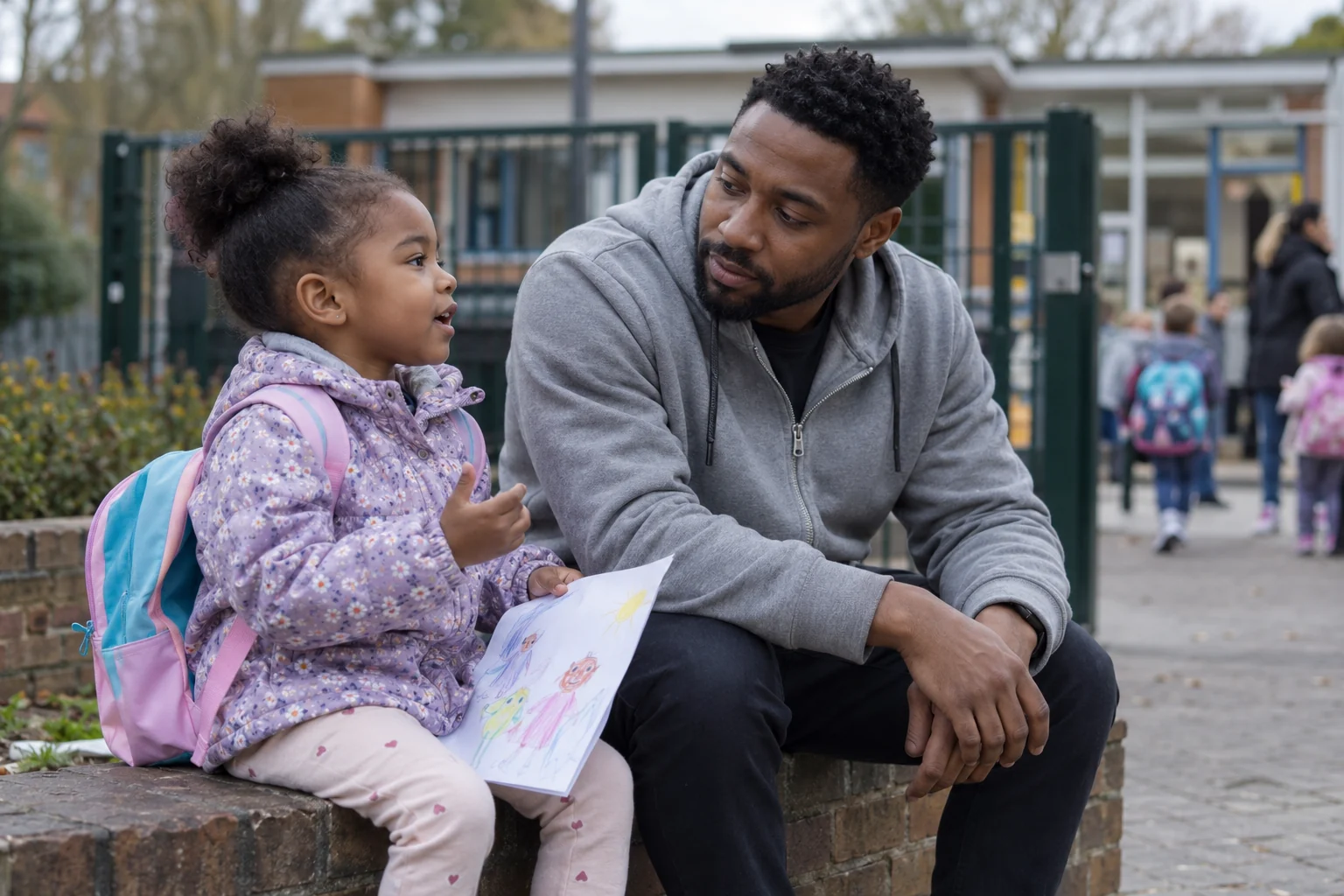
Ask about one small part of the day: something funny, a game or who sat beside them. Share something from your own day first. Food, a pause and a specific question often give you a better opening than “What did you do today?”
“What did you do today?” “Nothing.” You are holding a bag full of paintings, so something clearly happened. Try again over a snack, with one small thing they might want to tell you.
As a dad who misses the classroom hours, you want a glimpse of that part of their life: the games, the people, the small discoveries. Start with a detail your child can choose to share.
Why “What did you do today?” sometimes goes nowhere
A whole-day question is a lot to sort through after preschool. Your child may be hungry, tired or still thinking about the journey home. A snack and a smaller question give them a place to begin.
Early childhood educator Janis Strasser, EdD, offers open-ended prompts through NAEYC to encourage conversation. She also emphasizes giving children time to think. A useful opening still needs space after it.
Make room before asking for a story
Begin with the reunion: “I’m glad to see you.” Notice what your child needs. A walk home or a quiet moment preparing a snack may suit them better than questions at the classroom door.
When they begin, put your phone aside and pick up on what they actually say. The CDC describes attentive listening and reflection as ways to show children they are being heard. You can listen without requiring eye contact.
15 preschool conversation starters to choose from
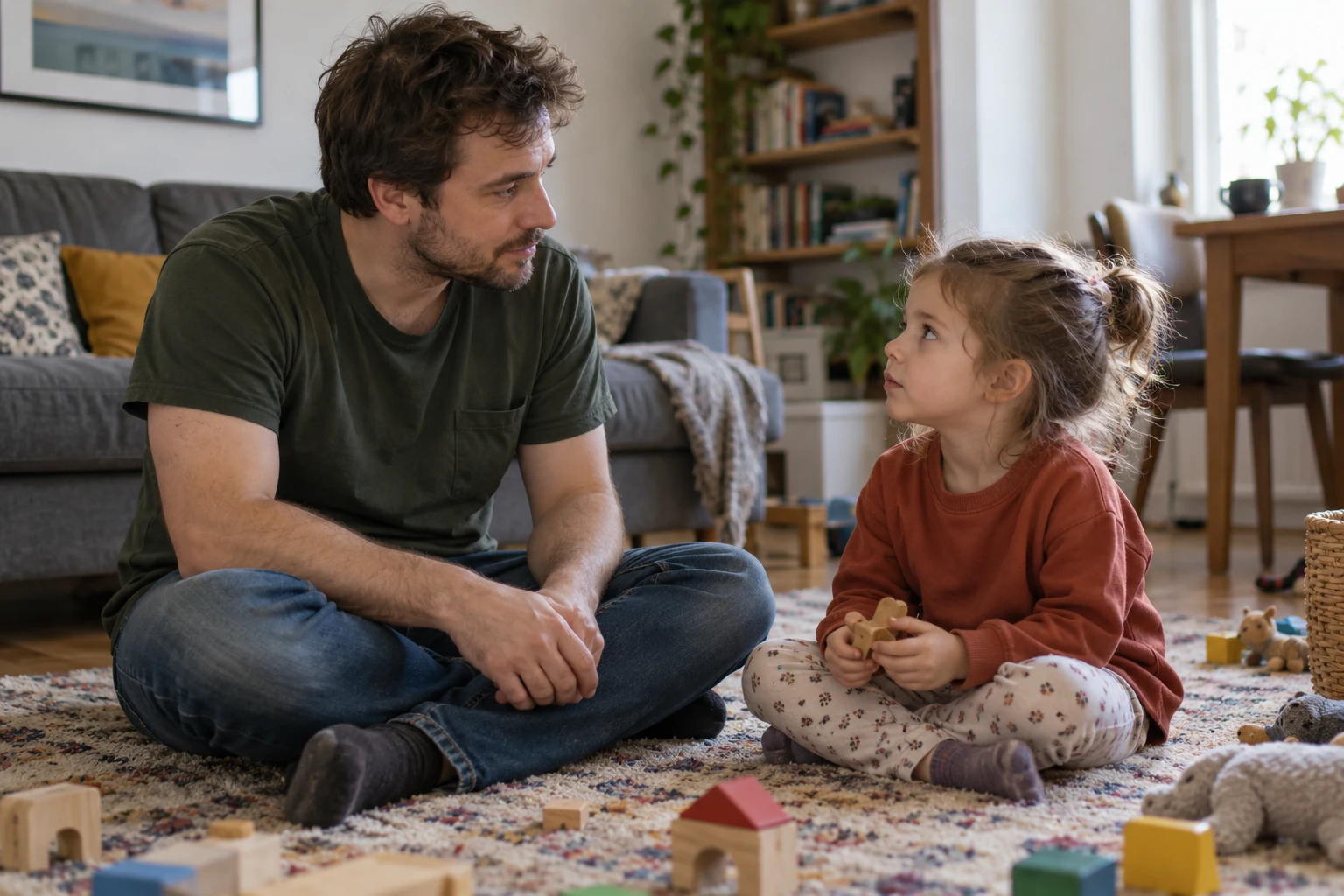
Pick one or two ideas from the list. Some invite a story; others let your child show you or act something out. Choose something that fits their classroom.
Start with something they can picture
- “What did you play with today?” If they say blocks, stay with the blocks instead of moving straight to lunch.
- “Can you show me a move from a classroom song?” Showing you can be the whole answer.
- “Where did you go on the playground?” Offer drawing if they would enjoy showing you that way.
- “Did you make something you want to tell me about?” If not, let this opening go.
- “What did you look at really closely today?” A snail or a zipper can matter as much as a planned activity.
Ask about play and people
- “What were the kids near you playing?” This also leaves room for a child who played on their own.
- “Did you play with someone? What did you play?” Wait for the first answer before asking the second part.
- “Is there a classroom game you could show me?” Follow their version, even if the rules are not immediately clear.
- “Who was in today’s story?” Use this if you know there was a story; otherwise, ask whether they read a book first.
- “Can you teach me a word or sound you heard?” A name, a silly noise, or a new expression all count.
Leave room for their point of view
- “What would you like to do again tomorrow?” They do not have to rank the whole day from best to worst.
- “Was anything tricky for you today?” Make room for “no” and “I don’t know.”
- “Was there a time you wanted some help?” Listen before assuming what did or did not happen next.
- “What would you like to do at preschool tomorrow?” A simple answer such as “painting” is enough.
- “Would you like to tell me a little bit, draw it, or talk about something else?” Moving on needs to be a real option.
Adjust the questions for a 3-year-old or a 4–5-year-old
With a 3-year-old, try something they can show: “Can you show me your circle-time dance?” If words are hard to find, let them act it out or point to a classroom photo the preschool has shared with you.
With a willing 4–5-year-old, you might follow two moments: “You built the bridge. What happened next?” ASHA describes developing storytelling at these ages, with differences between children. These are ways to adjust the conversation, not a test.
Follow their answer instead of reaching for the next question
“I made a tunnel.” You might say, “A tunnel!” and pause. If your child adds, “For the cars,” try, “The cars went through it.” You are showing interest without adding another task.
“Tell me what happened next.” Then wait. Strasser recommends giving children several seconds to think.
You can share a detail from your own day: “I missed my bus and had to run.” It gives you something to talk about without immediately asking for a story in return.
What if they still do not want to talk?
“Okay. You can tell me another time.” You can enjoy being together without getting a report. A quiet game or shared story gives you something else to connect over. Our low-energy games article has easy starting points for after work.
Avoid turning a puppet into an interviewer. If your child invents a classroom full of dragons, enjoy the story without treating it as a reliable account of preschool.
If a concern persists, talk with preschool staff. Take frightening or hurtful experiences seriously, listen without suggesting details, and seek help as needed.
Does your child prefer showing you their ideas through play? Our guide to joining pretend play gives you a shared situation to respond to without asking for an account of preschool.
Conversation can also grow out of something you return to together. Our dad-and-child rituals offer familiar occasions where your child can speak at their own pace.
Questions dads ask
How many questions should I ask each evening?
There is no quota. One can start a conversation; some days you will not need any. Notice whether your child adds more, changes the subject, or wants to stop.
Should I correct their sentences?
You can offer a natural version: “The cars went through the tunnel.” Keep listening to the story rather than making them repeat a corrected sentence.
My child tells the other parent more. Is that a problem?
Find your own openings around interests you share. Chat while making a snack or looking at a favorite book.
What if my child uses few words or more than one language?
Use the languages you are comfortable speaking, and welcome gestures as well as words. ASHA notes that mixing languages within a conversation can be part of multilingual development. Simplify the question and let your child show you. Discuss ongoing communication concerns with their teacher and a speech-language pathologist or another professional familiar with their development.
Sources and further reading
[1] Janis Strasser, EdD — NAEYC, Asking Questions to Stretch Your Child’s Thinking (2024).
[2] Janis Strasser, EdD — NAEYC, Conversations with Children! (2019).
[3] CDC — Tips for Connecting and Communicating.
[4] ASHA — Communication Milestones: 3 to 4 Years.
[5] ASHA — Communication Milestones: 4 to 5 Years.
General ideas for family life; seek individual professional advice for concerns about your child.