
Is Your Child Jealous of the New Baby? How Dad Can Stay Close to His Older Child
A second baby changes family life. Practical ways for dads to keep time with their 3- to 5-year-old, respond to jealousy and enjoy familiar activities together.
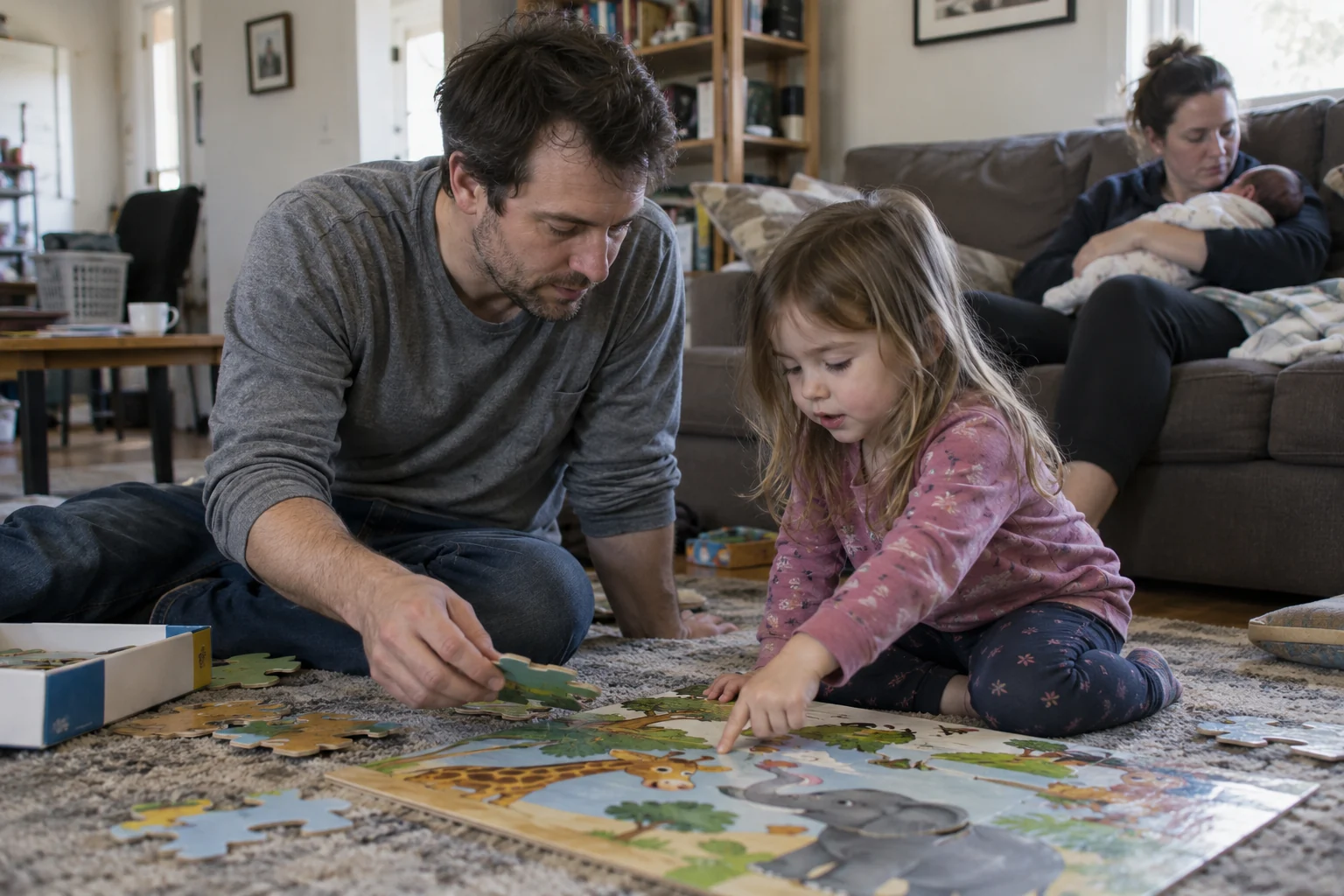
Keep one familiar activity with your older child when the baby arrives. Arrange short stretches when another adult cares for the baby and you can join your older child’s game. Welcome their feelings and supervise every interaction with the newborn.
You are halfway through building a bridge when the baby cries. By the time you return, the bridge is on the floor. Your older child has spent a lot of today waiting. Give them something familiar to come back to with you.
You want to keep enjoying things together. Your 3- to 5-year-old also needs to find their place with you as family life changes. Here are ways to prepare for the birth and protect your connection in the early weeks.
Why is my older child jealous of the new baby?
The changes they experience are concrete: you are less available when they call, outings look different and their game may be interrupted. They can be curious about the baby, then fed up a few minutes later.
The American Academy of Pediatrics explains that preschoolers may struggle with sharing attention and adjusting to change. It recommends individual time with the older child. The aim is to help your child find time with you in a busier family life.
Your older child still has a construction to show you, questions to ask and stories to tell. Make room sometimes for an activity or conversation that is about them rather than the baby.
Before the birth, make the changes understandable
Explain what will happen in your family: who will pick them up, where they will sleep if you go to the hospital and who will stay with them. “When we go to the hospital, Grandpa will be here. He’ll take you to preschool.” Repeat what is certain and adjust the details if plans change.
The HSE, Ireland’s public health service, advises preparing children for who will care for them during the birth. You can show them the relevant places and people without asking them to remember a complicated schedule.
Describe life with a newborn too: “At first, the baby will sleep a lot, cry and need us to take care of them. They won’t be able to play cars with you yet.” A concrete expectation is more useful than promising an immediate playmate.
In a Child Mind Institute article, clinical psychologist Kristin Carothers recommends keeping an individual ritual begun before the birth. It gives your child something recognizable as family life changes.
Choose a habit you would like to keep together: your book after a bath, breakfast or the journey home. If it relies on one fragile time slot, plan a more flexible version. Our guide to dad-and-child rituals can help you choose.
After the birth, offer time when Dad can take part
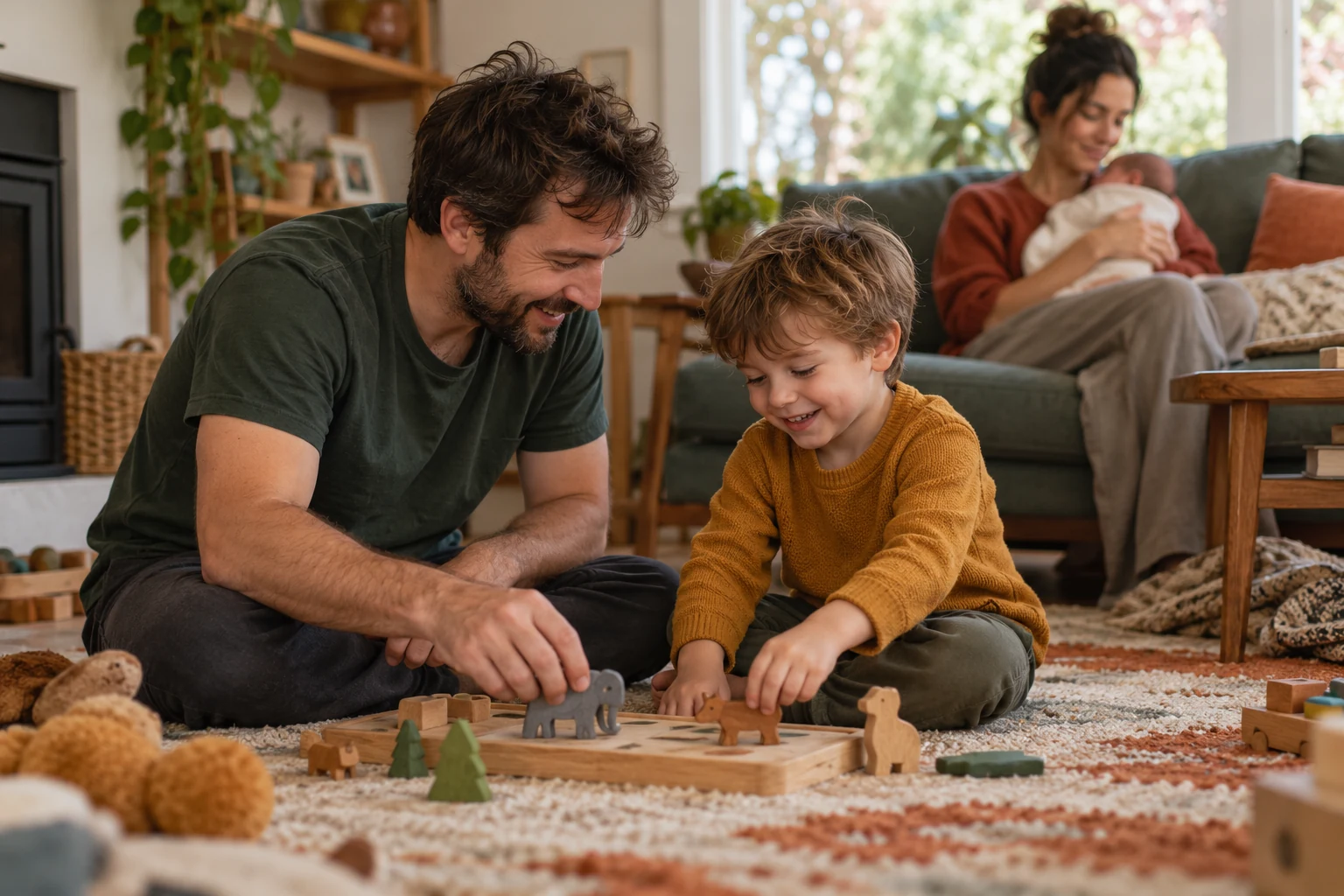
Agree on a workable handover with the other adult. One cares for the baby while the other spends time with the older child, adapting to everyone’s needs. Dad can take newborn care as well as time with the older child; keep the arrangement flexible.
Offer two options: “Would you like to draw or play with the garage?” Sit down with them and explain simply what will come afterward. This can be brief. Choose a time when you can actually participate.
If you have to stop, explain what is happening and what you can return to: “The baby needs me. I’ll put your building on this shelf to keep it safe. When I can come back, I’ll ask if you want to carry on.” Once you are available, return to your child instead of waiting for them to ask again.
Three ways to make room for your older child
Join their unfinished project
Ask them to show you what they started: a track, a drawing or a house. Take a role they offer. “Do I park the cars here?” Help without improving the project on their behalf.
This avoids preparing another activity when nights are short. Our low-energy games for tired dads offer other starting points.
Go on a small one-on-one outing
Choose a manageable trip: the library, a short walk or an errand with a choice your child can make. Explain what you will enjoy together, rather than presenting the outing as a way to stop them disturbing people at home.
Tell them one thing about your day and listen to what they notice. A bigger plan can wait. Our dad-and-child activities for ages 3–5 include simple options.
Look back at a memory about them
Find a photo of your older child when they were little and share a specific memory: what they called their stuffed animal, a walk you took or a meal you remember. Ask whether they want to choose another picture.
Avoid comparing them with the baby or using it to remind them that they are now “big.” They may enjoy hearing you talk about them, then want another activity. Follow what they want to look at with you.
“I want the baby to go away”: what can you say?
Start with what you understand: “You wish we were available like before. You miss that.” Let them express what they think without asking them to love their sibling on demand.
The HSE notes that jealousy and behavior changes can accompany this transition. It recommends including the child without forcing involvement. Your child can feel angry; you step in whenever an action could hurt someone.
If your child tries to hit the baby, intervene immediately and make the baby safe: “I won’t let you hit them. I’m moving you apart. You can tell me you’re angry.” Directly supervise interactions; a 3- to 5-year-old must not be left in charge of a newborn.
If you yelled in panic, return to the conversation once everyone is safe and calmer. Our guide to apologizing after yelling offers wording that keeps responsibility with the adult.
If your child asks for Mom when Dad offers time together
Avoid turning this into a test of which parent they choose. “You want Mom. I understand. I’m here with you while she rests.” Offer a familiar activity and stay nearby without requiring your child to enjoy it immediately.
Arrange moments according to what is possible, protecting time with the other parent too. You do not have to become the person who always takes your older child elsewhere while everything involving the baby happens at home. You can return to a game in the living room, take part in care and arrange handovers.
Invite help without handing over responsibility
“Would you like to choose between these two pajamas?” is an invitation. “I need you to be sensible; you’re the big one now” asks for self-control they may not always manage. Accept a refusal to help, and offer an appropriate role with supervision.
Keep moments when you help them too: opening difficult packaging, getting dressed or sitting close if they want to. Growing independence does not remove their need for your care.
If the change feels hardest in the evening, our guide to helping Dad take part in bedtime suggests gradual steps. You can keep a small occasion with your older child while adults share the baby’s care.
Questions dads ask when a second baby arrives
Do I need to spend exactly equal time with each child?
Their needs differ. Explain what is happening and protect opportunities for each to count on your attention. Tell your older child when you are available without promising equality to the minute.
What if they use baby talk again or ask for more help?
Respond to what they need without ridicule. The AAP describes possible returns to younger behaviors during this transition. A new, substantial or persistent change still warrants a conversation with a professional; avoid attributing everything to the birth.
What if I’m exhausted?
Choose something you can do sitting down, reduce what can wait and ask for a handover where possible. “I’m tired. I can read this book with you on the couch.” A specific offer helps your child understand what is available today.
When should we get help?
If dangerous actions recur, you struggle to keep everyone safe or distress persistently disrupts daily life, seek support from a child or health professional. You can ask for help as soon as the situation feels beyond what you can manage.
If sibling arguments bring back phrases you heard growing up, our guide to familiar parenting habits offers a way to prepare a different response.
Sources and further reading
HSE — Preparing older children for a new brother or sister
General ideas for family life; seek individual professional advice for concerns about your child.