
Dad Travels for Work: How to Stay Connected With Your 3- to 5-Year-Old
Dad away for work? Prepare your 3- to 5-year-old for the trip, enjoy simple activities on video calls and find your way back into everyday life together.
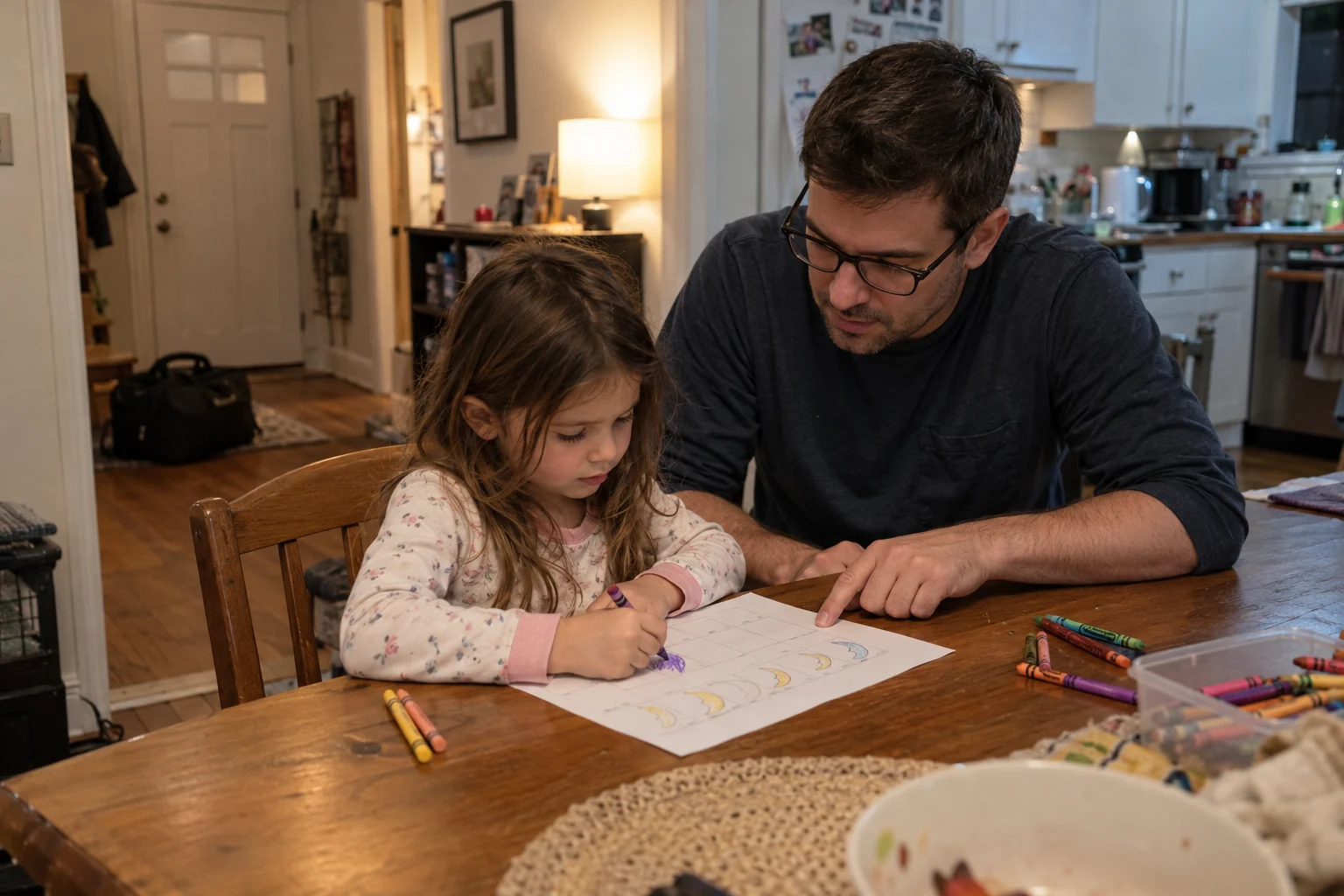
Explain who will care for your child and when you expect to return, using meals or sleeps as landmarks. Arrange a manageable call with the caregiver, bring a game or familiar character to it, and pick up everyday care when you get home.
You have waited all day for the video call. Your child shows you the ceiling, says “Hi,” and runs off. Tomorrow, bring something to do together: a drawing, a toy or the next bit of your dragon story.
At 3, 4 or 5, talking to a screen may not be the easiest way to spend time with Dad. A small shared activity can give your child something to do with you. Here is how to prepare for a few days away, stay in touch and find your way back into everyday life together.
If the parent staying home is preparing for their first full day of solo care, share our practical guide to a first day alone with a preschooler before departure. Agree on meals, rest and the return you will explain to your child.
How do you explain a work trip to your preschooler?
Keep it clear: “I’m going to work in another city. You’re staying here with Mom. I expect to be home on Friday after dinner.” Use the caregiver and landmarks that fit your family. If the return is uncertain, explain what you know and what you will confirm later.
The American Academy of Pediatrics recommends explaining a return using familiar events, such as meals or sleep. For several days away, you could draw the nights on a sheet and look at the return day together. The drawing gives you a reference to return to. Your child may still ask again or feel sad about the trip.
Leaving Monday and returning Thursday evening? Draw three moons for the nights away. The caregiver can cross one off each morning.
Say goodbye, with a familiar gesture if your child wants one. “You wanted me to stay. I understand. I love you, and I’ll be back on Thursday.” Only promise what you can keep. Your child does not need to smile or reassure you before you leave.
Make a plan with the adult at home
Ask when a call might fit. Your gap between meetings could land in the middle of dinner or just as your child falls asleep. Agree on what to do if the call cannot happen, too.
ZERO TO THREE recommends coordinating contact with the child’s caregiver and keeping exchanges flexible. Its resource was published during the pandemic; we are adapting selected guidance here for a short business trip.
Agree on a possible window, who starts the call and a recorded message if work runs late. Keep it manageable for the adult at home, too.
Stay interested in details: the library book your child borrowed, their current game or something they want to show you. You will have something to return to together without asking the other parent to provide a complete daily report.
On a video call, offer something to do together

In its guidance on video chats with young children, ZERO TO THREE suggests interactive exchanges, props and explanations for technical problems. The examples below are our applications for ages 3–5. Try one and see whether your child wants to join in.
Draw on your own sheets, together
You each need paper. Let your child choose what you draw: an animal, a house or something invented. Take turns showing your pictures. “My cat is missing something. What would you add?” If your child changes the subject, follow that rather than insisting on finishing.
Ask your child to introduce one object
Invite them to choose something safe to show you. Describe a detail you can see: “Your truck has a big bed. What is it carrying today?” Wait for an answer, which might be a gesture. You can show an ordinary object from your room while staying seated and available.
Continue a character’s adventure
Bring back a character you invented together: “The dragon has reached a blue door. What can it hear on the other side?” Your child suggests something and you act it out. Leave the next part for another time if they want to go and play.
Our guide to playing pretend with your preschooler has more ways to join their stories, including from a distance.
What if your child refuses a video call with Dad?
“You want to carry on playing. Okay, I’ll wave and we can talk another time.” Speak briefly with the adult if necessary, then finish. “You don’t even want to talk to Daddy?” asks your child to take care of your disappointment.
Check the basics: hunger, timing and sound. If a call falls flat, try a recorded message or a different moment tomorrow.
If they cry when it ends, acknowledge the feeling: “You want me there. I’m looking forward to being with you too.” Give a warning before hanging up and let the adult present offer comfort. Together, you can reconsider the timing or format of the next call.
When your schedules don’t line up
Make a short recording for your child: mention something you noticed today and invite them to share something when they want to. For example: “I saw a yellow bus outside my hotel. It reminded me of the one in your book. Will you show me your favorite page when I’m home?”
The adult at home chooses when to offer it. Your child can listen without replying. Keep messages and images in a private family space, and check that the file works before relying on it.
If you miss a promised call, own it: “I couldn’t call when I said I would. I’m sorry. Mom and I will let you know when I can try again.” Avoid giving a new time until you know you can make it.
How can Dad reconnect after a work trip?
Your child might run to you, stay busy or ask first for the adult who has been there. Respond to what happens: “I’m happy to see you. I’ll put my bag down, then come and see what you’re doing.” A hug can come later, or might not be what they want right then.
ZERO TO THREE’s Homecoming resource emphasizes realistic expectations and allowing time to reconnect. It primarily addresses babies and toddlers after prolonged military separations. That differs from a short business trip. The useful reminder here is to leave room for your child’s actual response.
Find out which habits have changed, then take on something concrete: preparing a meal, sharing a book or helping with bedtime. The adult who stayed home may need a break. Arrange the handover between adults without requiring a particular welcome from your child.
For a manageable starting point, try our dad-and-child activities. If travel is regular, your shared ritual might have an away version and a home version.
To talk about life while you are away, choose a question about a detail you know. Our questions about your preschooler’s day can help you begin without turning the call into a long interview.
Questions dads ask about work travel
Should I call every day?
Agree on a rhythm that fits the caregiver and your child. A short exchange you both enjoy is a good place to begin.
Should I bring a present?
You can if you want to. Being available when you get home is a separate matter: sit with your child, take an interest in what they are doing and resume daily responsibilities. You can also come home empty-handed with something to tell them.
What if my return is delayed?
Explain as soon as you have reliable information: “My train was canceled. I won’t be home tonight. Tomorrow, I’ll tell you when I can come back.” Have the adult at home change the calendar with your child and acknowledge their disappointment.
When should we ask for help?
If distress persists or substantially affects sleep, eating or daily life, speak to a professional who knows your child.
Sources and further reading
American Academy of Pediatrics — How to Ease Your Child’s Separation Anxiety
ZERO TO THREE — Staying Connected While Separated from Your Young Child (2020)
ZERO TO THREE — Five Tips to Make the Most of Video Chats
ZERO TO THREE — Homecoming: How to Reconnect After Separation, a military-family resource
General ideas for family life; seek individual professional advice for concerns about your child.